

WhatsApp in the Clinic: A Guide to Smart Usage and Quality Customer Service
Practice Resources|November 23, 2025

MedReviews
MedReviews
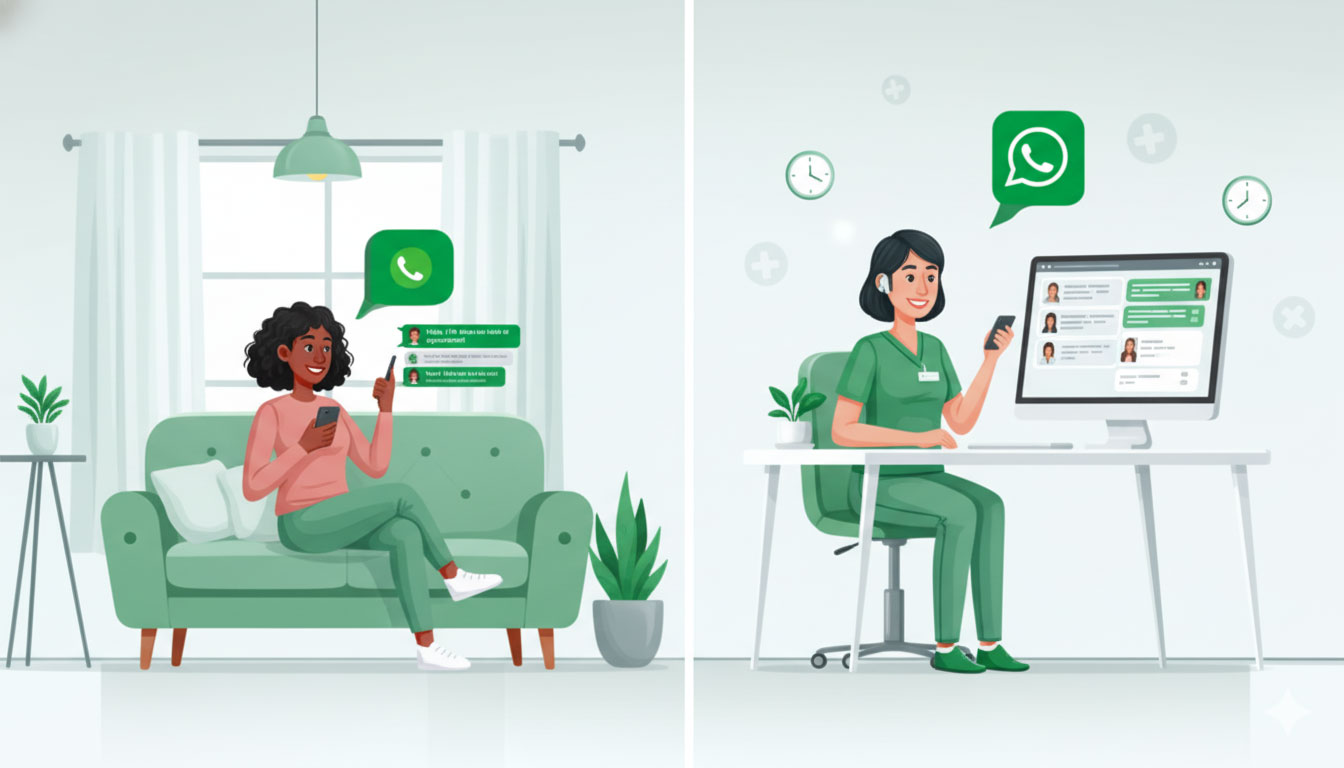
When a patient tries to contact your clinic, they don't think about communication channels or technological protocols - they simply want a quick, convenient answer at a time that suits them. We've gotten used to everything being at our fingertips (on our phone screens, of course) - including medical services.
WhatsApp has become an integral part of our daily routine, and many doctors are already using it as a communication channel with patients - sometimes in a planned manner, and sometimes simply because "it happened." However, smart use of WhatsApp requires more than just responding to messages. You need to know the advantages and limitations, where it fits and where it's better to avoid it, and most importantly - how to do it right without losing professional boundaries and sanity.
Why WhatsApp?
WhatsApp isn't just another app - it's a super popular app in Israel - perhaps the most popular. Over 90% of Israelis use it regularly, and it's the preferred method for most people for daily communication. WhatsApp is always open and feeds users with many varied messages - from friends, from the kids' kindergarten group, from the plumber and from the boss.
For patients, WhatsApp is a very convenient way to communicate with the clinic: there's no need to call during clinic hours, wait on the phone, or leave a voice message that may or may not be heard. They simply write, continue with their day, and receive an answer when the clinic is available. For you as doctors, this means fewer phone calls interrupting in the middle of the workday, less phone tag, and the ability to prioritize and manage communication more efficiently.
Regular WhatsApp or WhatsApp Business?
If you're using your personal WhatsApp to communicate with patients, you should get to know WhatsApp Business. It's a separate version designed specifically for professional use, with features designed exactly for situations like managing a clinic.
WhatsApp Business offers several features that can make our lives much easier:
● Organized business profile: You can add the clinic address, operating hours, website, and description of services.
● Automated messages: You can set up an automatic message notifying the patient that their message has been received and will be answered soon, or an away message when the clinic is closed.
● Labels and organization: You can mark conversations by topics - "new appointment," "test result," "urgent," "awaiting response." This helps a lot when there are many active conversations with patients.
● Quick replies: In WhatsApp Business you can use message templates that repeat themselves, for example test preparation instructions, clinic address, or answers to frequently asked questions.
● Statistics: You can see how many messages were sent, how many were read, and what the peak hours of inquiries are.
The Advantages of Using WhatsApp in the Clinic
There's a good reason so many clinics use WhatsApp, and not just because patients push for it. This tool offers real advantages:
● Convenience for both sides: The patient writes when convenient for them, and you answer when you have time. There's no need for scheduling times or phone receptionists. The communication is asynchronous, and that's exactly why it works.
● Fast and efficient communication: Need to send a test result? A photo of a prescription? A reminder before treatment? Everything passes within seconds. This saves a lot of time for both the patient and the clinic staff.
● Media usage: Patients can send photos of a rash, a wound, or medication they're unsure about, instead of describing it clumsily on the phone.
● Written documentation: Unlike a phone call, there's a record of everything that was said. You can review instructions, check what was agreed upon, and there's no room for misunderstandings.
● Intimacy and accessibility: There's something warmer and more personal about a WhatsApp message than a formal email. Patients feel they have a direct line to us, and this strengthens the therapeutic relationship.
● Time saving: Instead of explaining the same test preparation instructions to ten patients, you can send one clear message with all the details. The patient can read it when convenient and return to it at any time.
The Disadvantages of WhatsApp as a Service Tool in the Clinic
Like any tool, WhatsApp also has limitations and risks that are important to know before integrating it into the clinic:
● Blurring of boundaries: The biggest problem. When we give patients our personal WhatsApp number, the boundary between private and professional begins to blur. Messages arrive at 11:00 PM, on Saturday, on vacation. Patients don't always understand that doctors also deserve free time. Therefore, it's better to use the Business version so your personal phone doesn't get flooded.
● Privacy and data security issues: While WhatsApp is encrypted, it's not a medical platform. Sending sensitive test results, detailed personal information, or medical photos via WhatsApp may violate privacy protection laws. Additionally, it's easy to send a message by mistake to the wrong patient when there are many open conversations.
● Difficulty in medical documentation: WhatsApp doesn't integrate with the clinic management system. The information stays on the phone and isn't documented in the medical record. This creates a legal and professional problem - how will we know what was explained to the patient if it's not documented?
● Overload and flooding: When patients know they can write, they write. A lot. Sometimes for things that don't require an urgent response, sometimes for questions that could have waited for the next visit. Without proper management, you may find yourself responding to messages all day instead of working.
● Medical and legal liability: Providing medical advice on WhatsApp, without seeing the patient and without proper documentation, is a legal minefield. What seems like an innocent question can get complicated if something goes wrong.
Know Your Target Audience
Not every clinic and not every patient is suitable for WhatsApp communication. It's important to match the communication channel to the nature of the clinic and the patient profile.
A clinic treating a relatively young population accustomed to digital communication? WhatsApp can be an excellent fit. A clinic where most patients are elderly who aren't tech-savvy? It's better to maintain traditional phone communication.
The type of treatment also matters: in an aesthetic clinic, where patients want high availability and fast communication, WhatsApp may be more suitable. In a psychologist's clinic, where clear boundaries are part of the treatment itself, you need to think twice about whether this is the right direction.
Sometimes the right balance is to allow WhatsApp communication only for certain topics - appointment scheduling and reminders, but not medical advice. You might want to allow messages to be sent to you, but prefer to provide responses through other means.
Don't Put All Your Eggs in One Basket
WhatsApp is a great tool, but it shouldn't be the only one. A professional clinic needs a variety of communication channels that complement each other:
● Phone - Despite everything, there's still a need for this communication channel - suitable for older people, people who don't like to write, people driving, etc.
● Email - Suitable for formal communication, sending documents, or messages that don't require an immediate response.
● SMS - Perfect for automatic appointment reminders, which everyone receives regardless of the app (after all, not everyone uses WhatsApp).
● Online appointment system - Allows patients to schedule appointments themselves without needing mediation.
The patient needs to feel they have options, not that they must use a specific channel. This also reduces the load on a single channel and allows you to manage communication in a more balanced way.
Using WhatsApp in the Clinic: How to Do It Right
If you've decided to use WhatsApp in the clinic, here are some rules that will help you do it professionally and sanely:
1. Set clear boundaries from the start: Establish the operating hours of the WhatsApp service, and update the information in the business profile, on the website, and in the automatic response message. For example: "We respond to messages between 09:00-18:00, Sunday-Thursday." This way, if a patient writes on Saturday, they know the response will only come on Sunday.
2. Use automated messages: Set up a receipt message notifying that the message was received and will be answered soon. During hours when the clinic is closed, set up an away message with an alternative for urgent cases (for example, an emergency phone number).
3. Determine what's suitable for WhatsApp: Appointment scheduling? Excellent. Sending results? Maybe, but only if they're not too sensitive. Complex medical advice? No. Guidance for a patient hesitating about a side effect? Only if it's simple and clear, otherwise - "come to the clinic."
4. Maintain professionalism: Even if it's WhatsApp, it's still professional communication. Use clear and polite language, avoid unnecessary emojis, and don't start "social" conversations.
5. Document important information: Any significant medical information that passed through WhatsApp should also be entered into the medical record in the clinic system.
6. Use Business features: Labels help organize conversations ("awaiting response," "handled"), quick replies save typing the same instructions for the thousandth time. You don't need to reinvent the wheel every time.
7. Set dedicated WhatsApp time: Instead of responding every time a message arrives, set 2-3 times a day when you go through all messages and respond.
Common Mistakes to Avoid
● Responding at unreasonable hours: When you respond to a patient at 10:00 PM once, you've created a precedent. They'll expect it to happen again. Then another patient will hear about it, and another. Suddenly you're available 24/7 - and no one wants to be available all the time.
● Providing complex medical advice in messages: "Doctor, I have chest pain, what do I do?" - this is not a question for WhatsApp. Questions that require diagnosis, physical examination, or significant clinical decision-making aren't suitable for text.
● Sharing sensitive information carelessly: Sending test results, oncological diagnoses, or psychiatric information via WhatsApp is problematic. The patient's privacy may be compromised, and in any case, such information requires a personal conversation, not a message on the phone.
● Not setting clear boundaries: If you haven't defined your response times, patients will assume the answer will come within minutes. If you haven't clarified which topics can be discussed, they'll assume any topic is fine. Clear communication saves disappointments and friction.
● Selective ignoring of messages: If you have a business WhatsApp, you must manage it consistently. You can't respond to only some of the messages. If you see it's too much for you, switch to communication like email.
The Right Balance Between Convenience and Professionalism
WhatsApp is a powerful and convenient tool that can improve clinic service and strengthen the relationship with patients. It's not "magic," and it's not a solution to every problem, but with correct and thoughtful use it can facilitate communication, save time, and improve the patient experience.
The key is not to adopt the tool blindly, but to examine whether it fits your clinic, your target audience, and the type of work you do. If you've decided to use it - do it with clear boundaries, professional settings, and with the understanding that it's a complementary channel and not a substitute for real communication, while taking into account the characteristics of the Israeli patient audience.
Articles in the field of Practice Resources

YouTube Marketing for Doctors: Practical Tips for Promoting Your Clinic
Promoting your clinic on YouTube requires considerable investment, but the return is digital assets that last for years. Let's learn how to do it
MedReviews

Social Media Marketing for Doctors
Doctors can use social media to share knowledge, build trust, and attract new patients - without losing professionalism. Here's how to do smart and human marketing in the digital world.
MedReviews

Managing an Instagram Page for Doctors: A Practical Guide and Tips
Instagram is a search engine for everything. How to turn feed scrolling into clinic appointments? The complete guide for doctors: creating Reels, working with influencers, and proper management
MedReviews

The Importance of a Doctor Directory: Why Google Business Isn't Enough
Is a Google Business profile enough to manage your reputation? Discover why a professional doctor directory is an essential tool, what its advantages are over Google, and why you must combine both.
MedReviews

SEO for Doctors in the Age of Artificial Intelligence
The world of information search is changing, and SEO for doctors requires a new approach: professional content that creates value for users, consistent online presence, and building authority.
MedReviews

Medical Fake News: Health Misinformation Is Taking Over Social Media
An infodemic is an epidemic of fake news and medical conspiracy theories — and it's reaching every one of us. How do you spot health misinformation online, and what should you watch out for?
MedReviews
Book an Appointment
The service provided through the website is not a medical service. Documentation and sensitive information should only be given to doctors.
About
MedReviews is Israel's most advanced and reliable doctor index, centralizing information and verified reviews on doctors and clinics. Part of Israel's leading review site group, we connect patients seeking quality medical care with top recommended doctors. We achieve this through rigorous verification technology ('crowd wisdom') and advanced filtering mechanisms, providing full transparency in the medical world and enabling informed choices.
Navigation
Contact UsAboutPrivacy PolicyTerms of ServiceAccessibilityMedical articlesPhoto GalleryList your practice on MedReviewsLog inSpecialist Doctors
GynecologistsOrthopedistsOphthalmologistsPlastic SurgeonsDermatologistsCardiologistsENT DoctorsPsychiatristsGeneral SurgeonsOncologistsAesthetic MedicineDentistsDisclaimer
The information and content displayed on this site is intended to provide informative information and expressive opinion on behalf of third parties only they are not a substitute for professional medical advice and should not be relied upon as such advice. Any use of the information on the site requires examination and verification with the relevant parties. Use of the site and its contents is the sole and complete responsibility of the user