

Integrating AI in Clinic Management: Innovation, Efficiency, and Everything in Between
Practice Resources|March 23, 2026

MedReviews
MedReviews
Managing a modern clinic is a complex task that demands no small amount of maneuvering from physicians and administrative staff alike. On one hand, you are required to deliver the highest level of medical care, and on the other — to run a demanding operation that includes scheduling appointments, managing staff, billing, customer service, and medical documentation. The burden on teams is growing, patients expect faster and more accessible service, and regulation is only becoming more stringent.
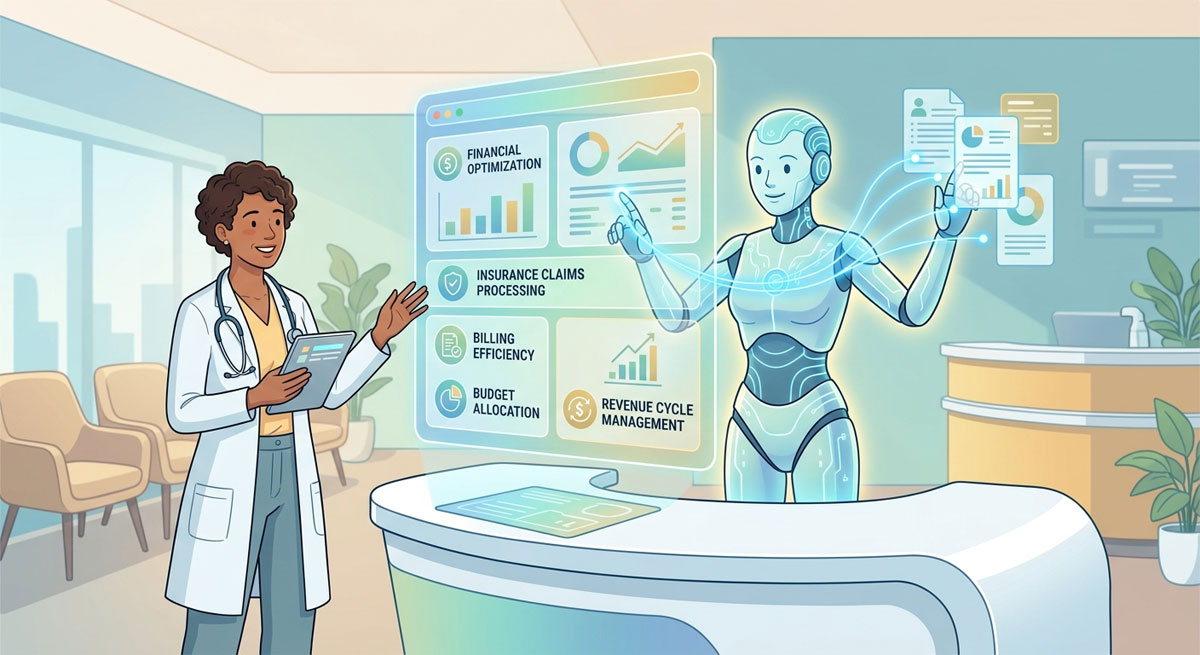
This is precisely where artificial intelligence enters the picture. Integrating AI in medicine in general, and in clinic management in particular, is an evolving standard that is changing the rules of the game.
The arrival of AI in the world of medicine brings with it quite a few advantages. Meet 6 practical tools you can implement in your clinic as early as tomorrow (including one particularly innovative one), and learn about the strict precautionary and ethical guidelines required in a medical environment.
The Quiet Revolution of AI Integration in Medicine
The global healthcare system, like the Israeli one, is facing unprecedented challenges. First and foremost — a severe and growing shortage of medical and administrative personnel, which is expected to worsen in the coming years. In the United States alone, the healthcare automation market is estimated to be growing at a dizzying pace and could surpass the $130 billion mark by 2030.
Artificial intelligence is stepping into exactly this vacuum. While medical computing systems of the past were limited to storing and displaying information, today's AI systems can analyze data, draw conclusions, and make decisions (or recommend them) in real time. Industry surveys show that nearly 70% of clinics believe AI integration can significantly reduce staff workload and improve productivity, as well as save billions in healthcare system expenditures.
From decision-support systems that read X-rays to algorithms that predict the spread of the flu during winter season — AI is everywhere. But the greatest revolution currently available to the standard clinic is not necessarily in the examination room itself, but in administration and operations. AI helps clinics shift from a "firefighting" approach to a proactive one that manages workloads efficiently, saves money, and delivers a patient service experience comparable to that of leading tech companies.
Why Should You Integrate AI Technologies into Your Clinic Management?
Implementing AI-based systems is not merely a "trend" — it is a vital growth engine that delivers clear-cut advantages:
● Efficiency and time savings (automation): AI takes on the most repetitive and draining tasks — answering technical questions, scheduling appointments, typing visit summaries, and more. It frees up secretaries and physicians to focus on what truly matters: the patients.
● Elevating the patient experience: Today's patients expect 24/7 availability. AI systems allow patients to receive immediate answers to their questions, schedule or reschedule an appointment from anywhere at any time, without tedious hold times on the phone.
● Reducing human error: When a physician or medical secretary is working under the pressure of dozens of patients per day, mistakes happen. AI operates with maximum precision, whether in medical record documentation or in generating invoices and billing insurance companies.
● Increasing profitability and reducing "downtime": Smart schedule management, including predicting appointment cancellations, allows a clinic to maximize its active hours and prevent financial losses caused by patient no-shows.
AI Tools You Can (and Should) Implement in Your Clinic
Customer Service and Appointment Scheduling Chatbot
Forget the outdated chatbots that required patients to "press 1 to schedule an appointment." Today's tools are based on large language models — or LLMs — like the technology behind ChatGPT and Gemini. A patient can write to the clinic's WhatsApp: "Hi, my tooth has been hurting since last night, I urgently need to see Dr. Cohen." The chatbot identifies the level of urgency, analyzes the patient's request, checks Dr. Cohen's calendar in real time, and suggests relevant appointment slots — all automatically, 24 hours a day.
Virtual Medical Scribe
One of physicians' central complaints is the extensive screen time required for documenting visits, which detracts from eye contact with the patient. New AI tools serve as a "personal assistant" that listens in real time to the conversation between the physician and patient (with consent, of course), filters out the small talk, and automatically generates a structured visit summary (for example, in SOAP format). The system places the summary directly into the patient's medical record, and the physician only needs to review, approve, and sign it. This tool saves physicians many long hours of administrative work every week.
Smart CRM Automation
The clinic's customer relationship management (CRM) system becomes proactive thanks to AI. The system can identify which patients have undergone a certain procedure and generate an automated communication sequence. For example: two days after a wisdom tooth extraction or a minor procedure, the CRM sends the patient a personalized message with a link to a brief pain survey. If the patient reports bleeding or unusual pain, the AI identifies the response and triggers a red alert to the physician or clinic nurse for immediate follow-up. This way you ensure excellent care continuity and prevent complications.
No-Show Prediction and Dynamic Schedule Management
We don't need to tell you that no-shows without prior notice are one of the biggest plagues of any clinic, hurting both efficiency and profitability. Modern AI systems analyze historical data (the patient's attendance history, travel distance, and even weather conditions on the day of the appointment) to assign each appointment a "risk score" for no-show likelihood. If the system identifies a patient with a high probability of not showing up, it will send them more reminders, or allow the clinic manager to perform a smart, calculated "double-booking" to prevent an empty time slot in the schedule.
Billing, Receipts, and Insurance Claims Management
For clinics that work with health insurance providers, claim denials due to coding errors are a significant headache. Artificial intelligence can scan thousands of procedure codes in a short time, identify discrepancies between clinical documentation and the payment request, and flag errors before the document is even submitted to the insurance company. This automation ensures a stable cash flow and minimizes the need for exhausting back-and-forth with insurance company representatives.
"AI Avatar" for Creating Personalized Patient Education Videos
Here is an innovative tool — perhaps even a game-changer — that can take your clinic into the future: imagine a patient finishing a visit during which they were prescribed a new medication or a complex treatment plan. Instead of sending them home with a generic printed instruction sheet that usually ends up in the trash, a software system generates a completely personal video just for them.
How does it work? The system uses the treating physician's photo and voice to create a "digital avatar." The AI pulls the summary data from the medical record and generates, in real time, a video in which the physician's avatar addresses the patient by name, in their native language, and empathetically explains: "Hi Yossi, remember to take the antibiotic twice a day after meals for one week." The video is sent to the patient's mobile phone.
This solution dramatically improves patient treatment adherence (compliance), reduces anxiety, and creates a "wow" effect that brands the clinic as innovative.
Ethics and Precautionary Guidelines for Using AI in a Clinic
Alongside the enormous enthusiasm for technological capabilities, it is advisable not to overlook the risks and challenges. Integrating AI in clinic management demands significant responsibility and careful attention to several key rules:
1. Privacy and data security above all: Medical information is the most sensitive type of data there is. It is strictly forbidden to enter patient details or medical summaries into open, free tools on the internet. Every AI tool embedded in a clinic must meet stringent data security standards, comply with local and international regulations (such as privacy protection regulations in Israel, HIPAA in the US, or GDPR in Europe), and operate within an encrypted and secured cloud environment.
2. The human stays in the loop: Artificial intelligence, however advanced, is not immune to errors and hallucinations. The guiding ethical principle is that AI serves as an assistant and recommender — but never replaces the professional judgment of a physician or medical administrator. The system can prepare the visit summary, but the physician must review and approve it before it is saved to the medical record.
3. Transparency and informed consent: Patients need to know when they are communicating with artificial intelligence and when with a human. If a chatbot is conducting a conversation with them, it must be made clear that they are interacting with an automated system. Similarly, when using tools such as a "virtual medical scribe," the patient must be informed and their consent obtained for the conversation to be analyzed by a technological tool.
4. Avoiding bias: Algorithms may contain inherent biases depending on the data on which they were trained. Clinic managers must remain critical, monitor the performance of the systems, and ensure they are not discriminating against or unfairly prioritizing patients on a demographic or other basis.
In Summary
Integrating artificial intelligence into clinic management is no longer a distant dream — it is the reality and future of healthcare services. From automating appointment scheduling, through one-click medical documentation, to super-personalized video tutorials created via avatar — these tools are designed to serve you, reduce the burden on staff, and provide patients with quality care and an advanced service experience.
That said, successful implementation requires smart management, strict adherence to security requirements, and a constant reminder that technology is meant to empower the human touch of medicine — not replace it.
Articles in the field of Practice Resources

WhatsApp in the Clinic: A Guide to Smart Usage and Quality Customer Service
WhatsApp in the clinic: A practical guide to smart usage of the popular communication tool. Advantages, disadvantages, tips for proper use and mistakes to avoid.
MedReviews

Networking for Doctors: The Complete Guide to Building a Network That Works for You
In today's medical world, networking is no longer just a buzzword reserved for sales reps, but an important strategic tool that you should be utilizing.
MedReviews

Doctors Managing Reputation: How to Collect Patient Reviews
How to collect patient reviews for your clinic. A guide for doctors: why reviews matter for Google and AI rankings, how to collect them the right way, and what to do after receiving them.
MedReviews

How Doctors Appear in AI Engines Like ChatGPT and Gemini
SEO for doctors no longer starts and ends with Google. How do you build digital authority that helps you appear in AI engine answers too? Read on.
MedReviews

Growing Your Private Clinic: How to Attract More Patients
A practical guide to growing your private clinic: from differentiation and digital presence to reputation management, smart networking and essential business metrics
MedReviews

Managing an Instagram Page for Doctors: A Practical Guide and Tips
Instagram is a search engine for everything. How to turn feed scrolling into clinic appointments? The complete guide for doctors: creating Reels, working with influencers, and proper management
MedReviews
Book an Appointment
The service provided through the website is not a medical service. Documentation and sensitive information should only be given to doctors.
About
MedReviews is Israel's most advanced and reliable doctor index, centralizing information and verified reviews on doctors and clinics. Part of Israel's leading review site group, we connect patients seeking quality medical care with top recommended doctors. We achieve this through rigorous verification technology ('crowd wisdom') and advanced filtering mechanisms, providing full transparency in the medical world and enabling informed choices.
Navigation
Contact UsAboutPrivacy PolicyTerms of ServiceAccessibilityMedical articlesPhoto GalleryList your practice on MedReviewsLog inSpecialist Doctors
DermatologistsGynecologistsOrthopedistsOphthalmologistsPlastic SurgeonsCardiologistsENT DoctorsPsychiatristsGeneral SurgeonsOncologistsAesthetic MedicineDentistsDisclaimer
The information and content displayed on this site is intended to provide informative information and expressive opinion on behalf of third parties only they are not a substitute for professional medical advice and should not be relied upon as such advice. Any use of the information on the site requires examination and verification with the relevant parties. Use of the site and its contents is the sole and complete responsibility of the user