

Information Security for Clinics
Practice Resources|April 28, 2026

MedReviews
MedReviews
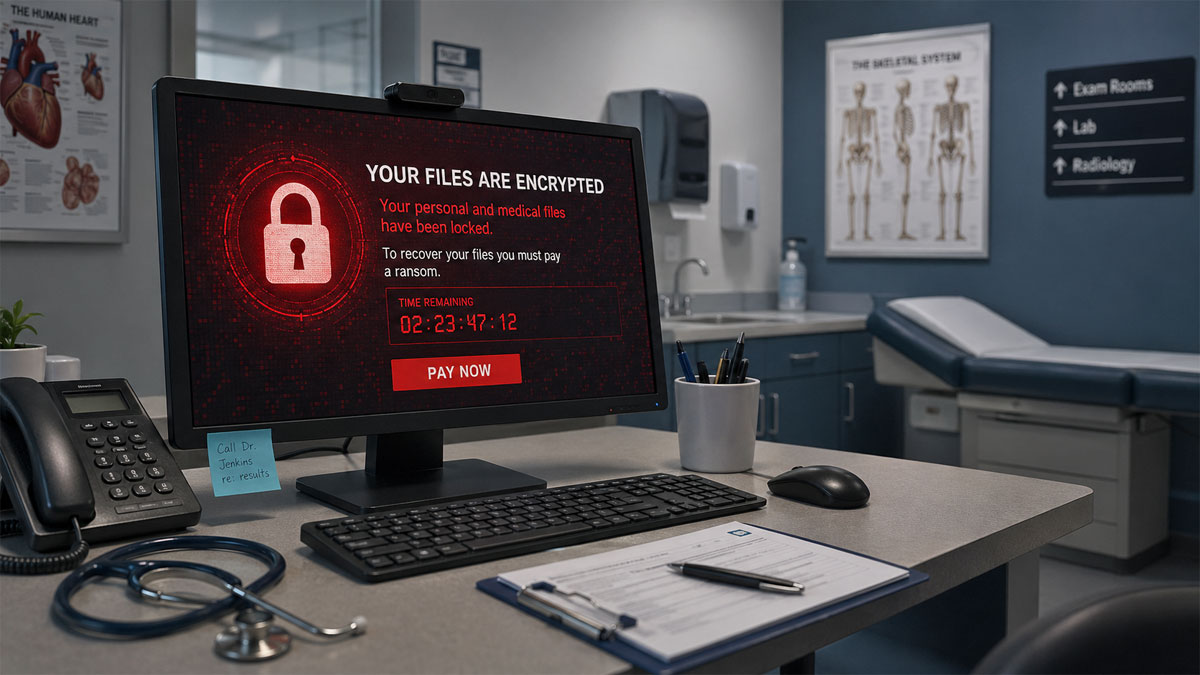
As physicians, you are focused on providing the best, most professional and dedicated medical care to your patients. But the reality is that we live in an era where our information is digital and far too often circulates freely. Patient files, medical histories, lab results, and even your patients' credit card details — all stored in computerized systems. The shift to digital management has made clinic operations more efficient than ever, but at the same time, it has opened a new and dangerous front that many physicians are insufficiently aware of: the cybersecurity and information security front.
The medical data you hold in your clinic is not merely "text." It is the most intimate, sensitive, and important information of the people who placed their trust in you. A leak of such data can cause enormous harm to patients and destroy the professional reputation you have built over years.
The Critical Importance of Medical Information Security
Medical information is considered the "gold" of the dark web. Stolen credit card details lose their value the moment the card is cancelled by the bank. But medical histories, psychiatric diagnoses, genetic test results, and chronic illness data — these cannot be cancelled. Hackers use this information to commit identity theft, extort patients, or to deploy ransomware against the clinic itself.
A ransomware attack occurs when malicious software locks and encrypts all computers and medical files in the clinic, and the attackers demand payment of tens to hundreds of thousands of shekels (usually in virtual currencies such as Bitcoin) just to "return the key" to your data.
A clinic (or any business) that falls victim to such an attack will be completely paralyzed: unable to receive patients, unable to know who has an appointment, and unable to access treatment histories. Beyond the operational damage, such an incident exposes the clinic owner to massive negligence lawsuits from patients whose privacy was violated. Many physicians tend to think: "I'm just a small clinic, why would they break into me specifically?" Reality proves otherwise; cyber attackers use automated software that scans the internet looking for easy targets. A small clinic, not backed by a hospital's security team, is a far more convenient target than a large and well-secured system (although every medical organization is at risk, due to the high value of the data).
Medical Information Security Standards and Regulations in Israel
In Israel, legislators and regulators treat medical information with the utmost seriousness, and the responsibility rests first and foremost with you — clinic owners. Under the law, you are defined as "database owners," and legal liability in the event of a data breach falls on your shoulders. The following are the central standards every clinic must know:
1. Privacy Protection Regulations (Information Security), 5777-2017: Under the Privacy Protection Law, information about a person's health is defined as "information of special sensitivity." The regulations stipulate that a medical database must meet at least a "medium security level," and depending on the size of the clinic and number of patients, sometimes also a "high security level." This means the law requires you to maintain access logs to know who accessed which file, enforce rigorous backup procedures, implement access control, and embed defined technological safeguards to protect the database. We recommend reading the document from the Ministry of Justice and the Privacy Protection Authority on the subject.
2. Ministry of Health Director General Circular 06/2022 ("Foundational Cyber Protection Regulation for Israel's Health System"): This circular, which came into effect at the end of 2022, represents a genuine revolution in Ministry of Health requirements. The circular establishes that the healthcare system, from large institutions down to small clinics connected to them, must align with a national protection standard. It requires clinic owners to take direct managerial responsibility for information security, perform rigorous backups, control employee access permissions, and ensure that the clinic's software vendors (supply chain) also meet strict cybersecurity standards.
3. Privacy Protection Authority Guidelines (2024–2025): In recent years the Authority has published several guidelines and position papers that tighten requirements for clinics. The central emphasis is on prohibiting the use of private, non-dedicated tools for transferring medical information. The Authority warns against sending medical documents, images, or lab results via applications such as WhatsApp, Telegram, or private email accounts such as Gmail. These tools do not meet corporate security standards. Additionally, the Authority clarifies that storing medical information on local software or outdated clinic computers (a "server in the closet") is now considered a dangerous practice that does not meet modern access control and backup requirements.
Where Most Clinics Fail: The Central Vulnerability Points
Most information security failures in clinics fall into two categories: technological failures and human failures.
Human Vulnerabilities
The human factor is usually the weakest link in the security chain.
● WhatsApp consultations: A very common phenomenon is a physician photographing a skin lesion, an X-ray, or a visit summary document and sending it to a colleague for consultation or to the patient themselves via WhatsApp. This is a direct violation of the Privacy Protection Law. The information is stored on the company's servers, may be backed up to the user's unsecured personal cloud (Google Drive / iCloud), and is exposed to anyone with access to the device.
● Password and user sharing: In many clinics, the entire reception team uses the same username to log into the clinic management software. This is a critical mistake. If a security incident or data leak occurs within the clinic, it will be impossible to know which clerk or staff member performed the action, which violates the legal requirement to maintain an activity log.
● Poor cyber awareness and phishing: Clinic staff receive dozens of emails per day. An innocent click on a malicious link that appears to be a message from the postal service or a bank can install ransomware that will destroy the entire clinic network within minutes.
Technological Vulnerabilities
● The "local illusion" — a physical server at the clinic: In the past, physicians felt safer when data was stored on a "central computer" sitting under the reception desk. Today, this is considered a security risk. Local computers generally do not receive routine security updates, they lack monitoring systems that detect breaches in real time, and they are physically vulnerable (they can easily be stolen during a physical break-in at the clinic or in a fire).
● Amateur backups: Many clinics rely on backups to a USB drive or a portable drive permanently connected to the computer. In the event of a ransomware attack, the malicious software encrypts the portable drive connected to the computer as well, leaving the clinic without any backup. A backup that is not encrypted or not physically or network-disconnected is not a real backup. Every clinic needs at least two backups in different formats (i.e., one physical and one in the cloud). Backups must be encrypted, and it is advisable to also have a physical backup located off-site (what is known as off-site backup), in case of fire, break-in, missile strike, or any other physical damage.
● Absence of multi-factor authentication mechanisms: Accessing the medical system using only a username and a weak password (such as "123456" or the clinic's name) is an open invitation to attack. Without an additional layer of protection, anyone who obtains the password can access medical files from anywhere. Access to computerized systems must be secured by multi-factor authentication, such as an SMS code, an Authenticator app, or various physical means such as security keys, biometric readers, and more.
The Physician's Toolkit: How to Protect Your Clinic and Data
To make your clinic a safe environment that meets the standards of the Ministry of Health and the Privacy Protection Authority, you do not need to be a computer expert, but you must demand the following standards from your technology providers:
Migrating to Secure Cloud-Based Clinic Management Software
Instead of managing data on the local server at the clinic, it is recommended to switch to dedicated cloud-based clinic management systems. These companies maintain information security teams, back up data on remote and secured servers, and ensure routine security updates. Verify that your software provider meets stringent security standards (such as ISO 27799 for health information security or the American HIPAA) and provides a contractual commitment to compliance with Israeli privacy protection regulations.
Two-Factor Authentication
Require that every login to the medical records software demand two-factor authentication. Just like logging into your banking app, where you receive a one-time code to your mobile phone (SMS or authenticator app), access to patient information must work the same way. This is the most effective line of defense against password theft.
Compartmentalization, Permissions, and Activity Logs
Every clinic employee must have a personal username and password. In addition, the "minimum privilege principle" (Need-to-Know) must be implemented: the receptionist should have access to the appointment calendar and the billing system, but not necessarily to the full clinical content of visit summaries. Your system must log every action — who accessed which file, when, and what they did (read, modified, or deleted).
Modern Backup Solutions
Your backup infrastructure must be separate and encrypted. At least two backups must be created, with one located off-site, such as in a secure cloud. This backup must be tested periodically to verify that data can actually be restored from it in the event of a system failure.
Discontinuing the Use of Private Applications for Medical Purposes
The habit of transferring medical information via WhatsApp or personal email must be eradicated. If you need to send a patient a visit summary, use the dedicated and secure patient portal that your medical software provides, or alternatively, send an encrypted document whose access requires a code sent separately. Also prohibit staff from photographing medical documents with their personal mobile phones.
Staff Training and Cyber Awareness
The best technology will not help if a staff member passes their password to an unauthorized party. Hold an annual training session for all clinic employees. Explain the dangers of email phishing, the prohibition on sharing passwords, and the importance of locking the computer screen when they leave the reception desk. You naturally do not need to do this yourself — there are many cybersecurity professionals who are familiar with the latest threats and know how to explain the subject in the best way, even to people who are not tech-savvy.
Information Security Is Not a Passing Trend
Managing a private clinic is a demanding business, and adding information security to the task list may seem like a heavy bureaucratic and technological burden. Nevertheless, cyberattacks are a daily occurrence and data leaks can destroy a medical career, which is why protecting data is not a recommendation — it is a moral, professional, and legal obligation.
Do not wait for an information security incident to arrive at your clinic. Consult with IT providers and privacy protection experts who understand the unique requirements of the Ministry of Health and the Privacy Protection Authority, upgrade your systems to managed and secured tools, and implement simple yet rigorous procedures. The right investment today will guarantee peace of mind tomorrow, and will protect the most precious thing you have as physicians — the trust of your patients.
Articles in the field of Practice Resources

Doctor TikTok: The Complete Guide for Physicians to Succeed on the World's Fastest-Growing Social Network
The complete guide for doctors looking to build a TikTok presence: case study analysis, adaptation for the Israeli audience, and practical tips
MedReviews

How Doctors Appear in AI Engines Like ChatGPT and Gemini
SEO for doctors no longer starts and ends with Google. How do you build digital authority that helps you appear in AI engine answers too? Read on.
MedReviews

Reputation Management for Doctors: Protect Your Good Name Online
Reputation management for doctors: patients are searching for you on Google, AI and social media. The complete guide to building a credible image, handling reviews and protecting your good name online.
MedReviews

WhatsApp in the Clinic: A Guide to Smart Usage and Quality Customer Service
WhatsApp in the clinic: A practical guide to smart usage of the popular communication tool. Advantages, disadvantages, tips for proper use and mistakes to avoid.
MedReviews

Outsourced Appointment Scheduling for Doctors: The Path to Higher Conversion Rates in Your Clinic
Outsourced appointment scheduling offers significant advantages over hiring a medical secretary, serving as an economic and operational growth engine for doctors
MedReviews

Growing Your Private Clinic: How to Attract More Patients
A practical guide to growing your private clinic: from differentiation and digital presence to reputation management, smart networking and essential business metrics
MedReviews
Book an Appointment
The service provided through the website is not a medical service. Documentation and sensitive information should only be given to doctors.
About
MedReviews is Israel's most advanced and reliable doctor index, centralizing information and verified reviews on doctors and clinics. Part of Israel's leading review site group, we connect patients seeking quality medical care with top recommended doctors. We achieve this through rigorous verification technology ('crowd wisdom') and advanced filtering mechanisms, providing full transparency in the medical world and enabling informed choices.
Navigation
Contact UsAboutPrivacy PolicyTerms of ServiceAccessibilityMedical articlesPhoto GalleryList your practice on MedReviewsLog inSpecialist Doctors
DermatologistsGynecologistsOrthopedistsOphthalmologistsPlastic SurgeonsCardiologistsENT DoctorsPsychiatristsGeneral SurgeonsOncologistsAesthetic MedicineDentistsDisclaimer
The information and content displayed on this site is intended to provide informative information and expressive opinion on behalf of third parties only they are not a substitute for professional medical advice and should not be relied upon as such advice. Any use of the information on the site requires examination and verification with the relevant parties. Use of the site and its contents is the sole and complete responsibility of the user