

The Guide to Managing a Facebook Page for Clinics and Doctors
Practice Resources|January 15, 2026

MedReviews
MedReviews
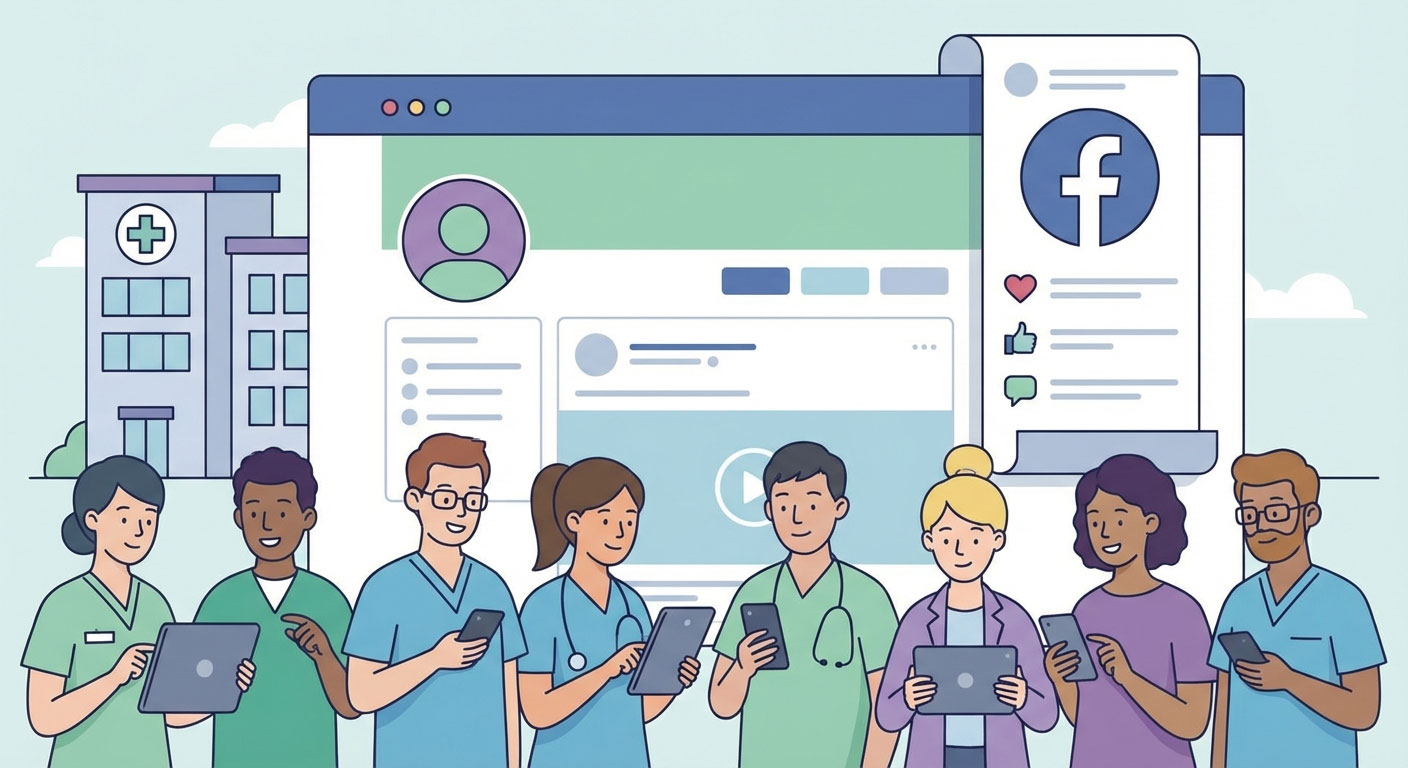
In many cases, the initial encounter between doctor and patient no longer takes place in the examination room but online - specifically on social media. Managing a digital presence has become an integral part of modern medical practice. The way the public consumes healthcare services has changed significantly. Social networks are not a negligible arena, and a significant portion of discourse, marketing, and service takes place there. A clinic's Facebook page is an important tool for establishing authority and building long-term trust relationships even before the patient sets foot in the clinic.
However, there is an inherent gap between the doctor's professional excellence in their field and the operational complexity of a social platform. Mistakes in content management, lack of understanding of the algorithm, or inappropriate responses to users can damage professional reputation that has been built with great effort over decades.
This guide is designed to provide doctors and clinic managers with the strategic framework and practical tools needed to manage a professional, fact-based, and results-oriented Facebook page.
Facebook 2026: State of Affairs
Facebook has long ceased to be the exclusive "kingdom" it once was. There is a continuous decline in organic traffic in favor of short video-based platforms like TikTok and Instagram, and increasing use of artificial intelligence that changes the way people consume information. Facebook itself suffers from large amounts of AI SLOP - worthless, poor content generated by artificial intelligence for traffic purposes. Young users are barely present on Meta's network, and the exposure of "regular" posts from business pages is at an all-time low.
Why Should a Clinic Open a Facebook Page Anyway?
1. Building Trust: Facebook has transformed from a social network into an engine of "social proof." Patients in the age group most relevant to clinics (30-65+) still check the doctor's Facebook page to see who is behind the name, whether the clinic is active and what content it produces, as well as whether the clinic provides service to patients through social media channels.
2. Communities and Groups: The real power of Facebook in 2026 lies in groups. Communities of patients or people suffering from certain diseases, neighborhood groups, and medical consultation forums are where Facebook's traffic still shines. Proper presence in groups can be very important and beneficial for clinics and doctors.
3. Recommendation Engine: Facebook now serves as a modern "Yellow Pages." When someone searches for a recommendation for a dentist or cardiologist in a local group, a well-managed Facebook page can serve as a kind of business card.
Before You Create a Facebook Page
Before we dive into "how," it's advisable to pause for a moment and ask "whether at all necessary." Creating a Facebook page is a commitment. A clinic that creates a page and abandons it, or uploads unprofessional, blurry, or clumsy content, may cause itself reputational damage - and in such a case, it's simply better not to create a page.
Managing a page requires three main resources:
● Time: Content planning, photography, writing, and responding to comments.
● Money: For paid promotion (without money, exposure is almost zero) and sometimes for professionals.
● Professionalism: Understanding of basic graphics, marketing writing, and compliance with medical ethics rules.
If you don't have the ability to allocate at least 5-7 hours weekly to page management (or budget for an external professional), it's better to forgo the pleasure. A "ghost" page with a last post from 2022 conveys neglect, a trait no patient wants to attribute to their doctor.
Creating a Facebook Page for a Clinic - First Steps
Creating a page is not just clicking "Create Page." In 2026, your page needs to function as a landing page for all purposes.
1. Meta Business Suite: Don't manage the page from your personal profile. Use Meta's business management system. It allows post scheduling, accurate data analysis, and secure permission management.
2. Branding:
○ Profile Picture: For an independent doctor – a professional, smiling portrait photo in work clothes (coat or dignified attire). For a large clinic - a high-quality, high-resolution logo. If you don't have a logo yet, it's recommended to start a branding process with a professional - long before creating a Facebook page.
○ Cover Photo: Don't just put a random picture of the clinic. Use a cover that explains in 3 seconds what you do. "Plastic Surgery Specialist Clinic – 20 Years of Experience." On Facebook, like any other social network, you're competing for the user's attention.
3. "About" Section (Bio): This is where Facebook's and Google's algorithms scan you. Write a description that includes relevant keywords (for example: "Orthopedic Specialist in Haifa," "Disc Herniation Treatment").
4. Call-to-Action Button (CTA): Set a prominent button: "Book Appointment" (if you have an online system), "Call Now," or "Send WhatsApp Message." Make sure the links work.
Ongoing Facebook Page Management
The most common mistake doctors and clinics make is treating their Facebook page as a digital bulletin board, one whose sole purpose is to shout "Special Offer!" or "Come Book an Appointment!" Users don't go on Facebook to be aggressively sold medical services. They're looking for connection, reliable information, and a sense of security against the endless "fake news" flooding the network. When a clinic's page focuses only on direct marketing, it loses the strongest asset you have as doctors: your professional authority. Today's modern patient is much more sophisticated; they'll easily skip a generic "10% discount" post, but they may stop and take interest in content that truly explains the problem they're suffering from or gives them a real glimpse into what happens inside the clinic, or even "just" teaches them something new.
To generate real engagement and become regular followers, your strategy must be based on providing value. That is, the goal is to make your medical knowledge accessible in a simple, interesting, and even "fun" way to consume. Instead of posting a sales post about dental treatments, try uploading a short video explaining why people are so afraid of them and how your new technology solves that.
The winning rule of thumb is the "80/20 formula": Ensure that 80% of your content is educational or value-providing (tips, myth-busting, behind-the-scenes), and only 20% is directly promotional. When you help people for free through the information you share, you build in them the understanding that you are the experts in the field. Thus, at the moment of truth when they need treatment, your clinic will be the natural and obvious choice for them.
Video Content and Reels
Short video content receives priority in Facebook's algorithm (and not only there). This is the most popular way to consume content on social networks.
For the medical sector, this format holds a significant strategic advantage: it allows creating digital "clinical proximity." When the patient sees the doctor explaining a complex concept at eye level, a psychological interaction occurs that reduces entry barriers and strengthens the sense of confidence in your expertise. Unlike static text, video conveys nuances of credibility, empathy, and authority – important elements in the patient's decision-making process.
There's no need for polished studio productions that look like sponsored ads - on the contrary. The public has developed immunity to over-produced image videos, and they're looking for the real doctor inside the clinic. Filming in vertical format using a modern smartphone, under good lighting and in a quiet environment, can provide a professional result that also looks authentic. The winning strategy is focusing on "micro-knowledge": a 30-60 second video dedicated to one focused medical topic. Don't try to cover an entire field; explain what a specific screening test is, what's the most common myth about a certain procedure, or what recovery from treatment looks like.
Most users consume social media content in "mute" mode while in public spaces, so it's mandatory to add subtitles to every video (and also to make the video accessible to people with disabilities). Video without subtitles loses about 70% of its effectiveness.
Integration into Relevant Groups
While organic exposure of business pages is eroding, Facebook's real power today lies in groups and communities. A quality group containing tens and hundreds of thousands of participants can bring significant traffic and customers. The key to success in these spaces is avoiding direct or intrusive advertising, which is often perceived as unnecessary content flooding and may damage your professional reputation. Instead, it's recommended to locate groups relevant to your specialization areas, such as parent groups, local communities, or medical support forums, and integrate into them as an authoritative and helpful figure providing evidence-based professional knowledge.
When a professional question arises in your field, respond in a detailed, matter-of-fact, and welcoming manner that emphasizes your expertise. Such quality response not only helps the original questioner but builds your credibility with all group members who observe the discourse and are impressed by your knowledge. At the end of the response, you can direct those interested to continue reading on the clinic's page, thereby driving quality and focused traffic of potential patients who have already received initial proof from you of your knowledge and professionalism.
Don't try to use groups as a megaphone for advertisements. Users don't like spam, and you may also get kicked out of the group. Make sure to read the group rules before responding and posting in it.
Customer Service and Response on Facebook
For the patient, Facebook Messenger is a legitimate communication channel just like the phone.
● Speed is the name of the game: Try to respond within an hour or two. If it's impossible, set up an "auto-reply" that updates that their message was received and you'll get back to them within X time, or direct them to the clinic's WhatsApp.
● Ethics and Medical Confidentiality: Never give a specific medical diagnosis on Facebook.
● Handling Negative Comments: Don't delete criticism (unless it includes profanity or defamation). Respond in a matter-of-fact and respectful manner: "We're sorry to hear about your experience, we'd be happy to thoroughly examine the case. Please contact us privately."
A Look at Paid Promotion (Ads)
A page promotion strategy can also be based on paid promotion - sometimes even exclusively. A page at the beginning of its journey needs traffic, and this is the fastest way to bring initial visitor traffic.
● Geographic Targeting: Most clinics rely on a patient audience located within a reasonable travel distance. Meta's targeting capabilities allow particularly high accuracy. It's recommended to set for ads an exposure radius ranging from 10 to 20 km around the clinic (depending on population density and type of specialization).
● Value-Based Ads: In an era of "banner blindness," direct sales ads encounter resistance. Instead of investing in "come to the clinic" ads, use the paid budget to push posts that provide real value - for example, a Reel explaining how to identify early signs of a medical problem. After the user has received useful information from you, you can incorporate a gentle call-to-action (CTA) at the end of the video or in the accompanying text.
● Remarketing: A professional marketing term that embodies an entire clinic promotion strategy. The decision-making process for choosing a doctor usually requires several "touchpoints" until full trust is built. On Facebook, you can choose to display specific follow-up ads to people who have already shown interest: those who visited the clinic's website, watched more than 50% of your video, or responded to a post on the page. This is the "warm" and most relevant audience, and their likelihood of becoming an actual patient is higher than that of a random user.
● Message and Lead-Based Campaigns: You can use campaigns that open a direct WhatsApp conversation with the clinic or built-in lead forms within Facebook (Instant Forms). This shortcut saves the user from going to external sites and significantly increases conversion rates, especially on mobile.
● AI-Based Optimization: Meta's systems today know how to identify which users are more likely to convert based on their past behavior. Instead of trying to "guess" the exact target manually, give the algorithm freedom of action while feeding quality and diverse creative. The algorithm will learn very quickly who responds to your content and will focus the budget on those people with the highest potential to reach the clinic.
● A/B Testing: Don't rely on just one ad. Upload two versions of a video or image simultaneously - for example, one video where you speak directly to the camera versus a video showing the advanced equipment in the clinic. Data analysis will quickly reveal what "works" on your audience and what generates actual inquiries, allowing you to optimize the budget and avoid wasting on creative that doesn't produce results.
Ultimately, success in digital medical marketing relies on the delicate balance between professional excellence and intelligent utilization of advanced technological tools. Whether it's AI-based campaign optimization or close management of customer service in Messenger, the goal is one: to create a sequence of positive "touchpoints" that reduce barriers and strengthen the user's sense of security. A clinic that chooses to invest in consistent and professional digital presence maintains its relevance in a competitive market and can bridge the gap between the physical clinic and the virtual space.
Articles in the field of Practice Resources

SEO for Doctors in the Age of Artificial Intelligence
The world of information search is changing, and SEO for doctors requires a new approach: professional content that creates value for users, consistent online presence, and building authority.
MedReviews

Networking for Doctors: The Complete Guide to Building a Network That Works for You
In today's medical world, networking is no longer just a buzzword reserved for sales reps, but an important strategic tool that you should be utilizing.
MedReviews

Growing Your Private Clinic: How to Attract More Patients
A practical guide to growing your private clinic: from differentiation and digital presence to reputation management, smart networking and essential business metrics
MedReviews

Integrating AI in Clinic Management: Innovation, Efficiency, and Everything in Between
How can artificial intelligence streamline your clinic? Discover practical and innovative AI tools for clinic management that will save you time and money while elevating the patient care experience
MedReviews

The Epidemic of Violence Against Medical Staff in Israel: Historical Overview, Causes, and Practical Tools for Response
Violence against medical teams in Israel is on the rise. What are the causes of the phenomenon, how can danger be identified in advance, and what tools can help address it?
MedReviews

Social Media Marketing for Doctors
Doctors can use social media to share knowledge, build trust, and attract new patients - without losing professionalism. Here's how to do smart and human marketing in the digital world.
MedReviews
Book an Appointment
The service provided through the website is not a medical service. Documentation and sensitive information should only be given to doctors.
About
MedReviews is Israel's most advanced and reliable doctor index, centralizing information and verified reviews on doctors and clinics. Part of Israel's leading review site group, we connect patients seeking quality medical care with top recommended doctors. We achieve this through rigorous verification technology ('crowd wisdom') and advanced filtering mechanisms, providing full transparency in the medical world and enabling informed choices.
Navigation
Contact UsAboutPrivacy PolicyTerms of ServiceAccessibilityMedical articlesPhoto GalleryList your practice on MedReviewsLog inSpecialist Doctors
DermatologistsGynecologistsOrthopedistsOphthalmologistsPlastic SurgeonsCardiologistsENT DoctorsPsychiatristsGeneral SurgeonsOncologistsAesthetic MedicineDentistsDisclaimer
The information and content displayed on this site is intended to provide informative information and expressive opinion on behalf of third parties only they are not a substitute for professional medical advice and should not be relied upon as such advice. Any use of the information on the site requires examination and verification with the relevant parties. Use of the site and its contents is the sole and complete responsibility of the user