

Aesthetic Medicine and Injections: The Guide to the Pursuit of a Youthful Look
Health Magazine|July 03, 2026

MedReviews
MedReviews
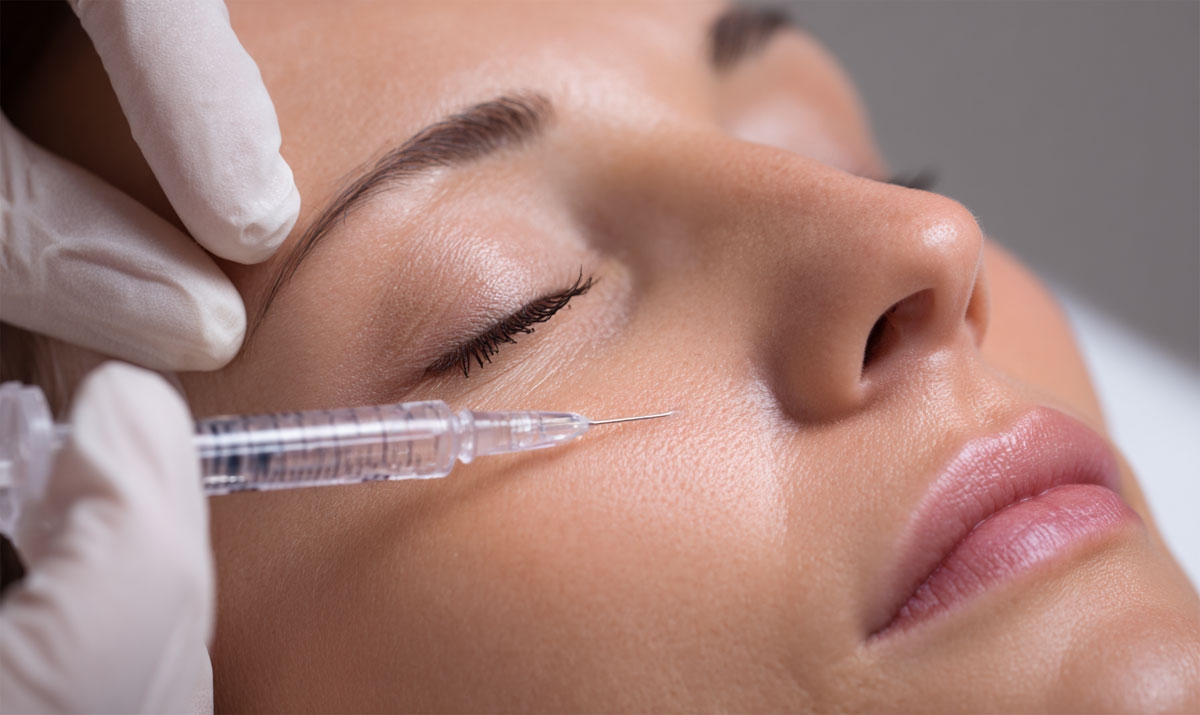
If in the past aesthetic medicine was considered a "secret" topic or the exclusive domain of celebrities, today it is an accessible, open, and socially acceptable field. Innovative technological developments, the quality of materials, and the shift from invasive surgeries to treatments based on minimal injections ("lunchtime treatments") have completely changed the rules of the game. However, the immense popularity of the field has also brought with it quite a few dangers, charlatanism, and partial information that can confuse potential patients.
The Numbers Behind Beauty
The aesthetic industry in Israel is experiencing tremendous and unprecedented growth. According to estimates, about 700,000 different aesthetic treatments are performed in Israel every year, and the sector continues to expand at a dizzying pace. Israelis, both men and women, look for quick and effective solutions to improve body image and self-confidence, even in times of war and uncertainty.
Data from the Israeli Association of Plastic and Aesthetic Surgery in 2024 shows that over 50,000 aesthetic plastic surgeries were performed in Israel that year. Alongside them, the field of injections is on a constant rise, with tens of thousands of people choosing hyaluronic acid and other fillers in various clinics every year. These treatments have become the ultimate choice for those seeking visible results without the need for a long recovery period.
Another fascinating trend clearly visible in Israel is the entry of men into the world of aesthetic treatments. If in the past clinics were filled almost exclusively with women, today men constitute a more significant portion of patients (about 15%-25%). Many of them turn to injection treatments to smooth out forehead wrinkles or to sculpt and define the jawline and chin, aiming for a more masculine and sharper facial look. The understanding that aesthetic grooming is not a "luxury" but part of ongoing personal maintenance now crosses genders and ages.
Popular Types of Aesthetic Treatments and Injections in Israel
The world of aesthetic medicine currently offers a wide arsenal of tools to deal with the signs of aging, loss of volume, and expression lines. There is no single material suitable for all problems: each filler or injection material works through a different biological mechanism and is intended for a different area of the face.
Botox (Botulinum Toxin)
Botox is perhaps the most familiar name in the field of aesthetics, but the public often confuses it with fillers. Botox is not a filler, but a protein derived from a bacterium that works by temporarily relaxing the muscles responsible for creating expression lines (dynamic wrinkles). The treatment is particularly common in the upper third of the face: between the eyebrows ("frown lines"), along the forehead, and on the sides of the eyes. The treatment itself is very quick, almost painless, and results begin to appear within a few days up to two weeks from the injection. The effect of Botox usually lasts between three and six months, after which the muscle returns to its normal activity. Beyond the aesthetic aspect, Botox is also used for medical treatments such as preventing excessive sweating, relieving migraines, and treating teeth grinding (bruxism).
Hyaluronic Acid
This is the most common and safest filler in use today. Hyaluronic acid is a sugar molecule naturally produced in our body, and its role is to absorb water, hydrate the skin, and maintain its volume. With the aging process, the body's production of this acid decreases, leading to the formation of static wrinkles, hollows, and the loss of facial contours. Hyaluronic acid produced in a laboratory (from a non-animal, synthetic source) is injected into the skin at various viscosity levels depending on the treatment area. Thinner materials are used to fill fine lines or smile lines on the sides of the mouth, while thicker, more viscous materials are used for nose sculpting, enhancing cheekbones, building a jawline, and lip filler. The huge advantage of hyaluronic acid is that the result is visible immediately, it lasts between six months to a year and a half, and it can be completely dissolved using an enzyme called "hyaluronidase" in case of dissatisfaction or complication.
Biostimulators (Collagen Stimulators)
An advanced group of materials injected into the skin not only to provide immediate volume, but primarily to stimulate skin cells to produce new collagen and elastin. Under this category, you can find materials like Radiesse, which is based on calcium hydroxyapatite, and Sculptra, based on poly-L-lactic acid. The treatment is suitable for people suffering from significant thinning of the skin on the face, neck, or the back of the hands. The result builds up gradually over several months and lasts for a relatively long time of up to about two years.
Thread Lifts
Another popular method is based on inserting absorbable threads under the skin using a fine needle or cannula. The threads create a mechanical lifting effect on sagging tissues, and simultaneously, as they dissolve in the body, they stimulate collagen production. This treatment is often used as a substitute or postponement for a classic facelift surgery.
Price Range for Aesthetic Treatments
The price range of aesthetic treatments in Israel is influenced by a series of factors: the reputation and experience of the treating doctor, the clinic's location, the injection technique, and of course – the type and brand of the injected material (premium materials approved by the FDA and the Ministry of Health will be significantly more expensive than generic materials or materials lacking a clear standard). Here are general price ranges commonly accepted today in the Israeli market:
The cost of Botox injections is mostly priced according to the number of injection areas (forehead, between the eyebrows, sides of the eyes). The price for a single area usually ranges between 600 NIS and 1,500 NIS. Many clinics offer an affordable package for treating the three main areas in the upper third of the face, costing around 1,500 NIS to 2,500 NIS on average.
The cost of hyaluronic acid injections is priced by the number of syringes used. A standard syringe usually contains 1 cc of material. The price per single syringe ranges widely between 600 NIS and 3,800 NIS, while the average price for quality materials stands at 1,500 NIS to 2,200 NIS per syringe. More complex treatments that require thick premium materials, such as jawline contouring or cheek lifts, may require multiple syringes and can easily cross the 3,000 NIS threshold.
Treatments with biostimulators like Radiesse can be more expensive due to the complexity of the material and its long-term effect, and will generally start around 2,500 NIS per syringe and up.
Tips for Finding the Perfect Doctor and Clinic
The decision to entrust your face to another person is a fateful one. To ensure a safe, natural, and successful treatment, it is important to strictly follow several golden rules when choosing your practitioner:
- Valid Medical License: According to the regulations of the Israeli Ministry of Health, only doctors (including dentists) are authorized to perform invasive procedures of Botox and hyaluronic acid injections. Do not be ashamed to ask to see a doctor's license and even verify it in the Ministry of Health's official registry of doctors.
- Experience and Training: Although any doctor in Israel is legally permitted to inject, it is recommended to go to doctors with specific experience, such as specialists in plastic surgery, dermatologists, or doctors who have undergone official, comprehensive, and prolonged training in aesthetic medicine. A skilled doctor will know how to evaluate your unique anatomy and avoid an "overdone" look.
- Check the Doctor's Reputation: Search in medical directories, relevant social media groups, and of course, talk to your friends who have undergone similar treatments. Verify that the reviews come from real people and not from various profiles that look fake. It is advisable to gather as much information as possible about the doctor before making a decision on where to undergo the aesthetic treatment.
- Check the "Before and After": A successful doctor will take pride in their work and publish many detailed "before and after" photos of aesthetic treatments on their website. Look at the photos, make sure it matches the style and direction you want, and make an informed decision. If there are no such photos (or the doctor doesn't have a website) - it is recommended to avoid them.
- Consultation Meeting: Do not agree to an immediate treatment without a coordination of expectations. During the consultation, the doctor should diagnose the skin condition, present the treatment options to you, and explain the possible side effects and risks clearly and transparently.
- Transparency About Materials: It is your full right to know exactly what material is being injected into your body. Ask to see the packaging, the expiration date, and ensure that the product is approved by the Israeli Ministry of Health or strict international standards (such as the European CE or the American FDA). Sometimes doctors will give you a sticker from the syringe packaging so you can document the type of material in your medical file.
- Use of Advanced Equipment: Incorrect penetration of filler into a blood vessel can endanger you. Such an injection causes a sudden blockage of blood supply to the tissue. Without immediate identification and urgent injection of a dissolving enzyme (hyaluronidase) by the doctor, necrosis (death of skin tissue), permanent scars, and more can develop. To minimize risks, advanced doctors in Israel and around the world are beginning to adopt the use of ultrasound devices prior to injection to map the patient's exact blood vessels and avoid damaging them. It is recommended to inquire whether the doctor uses such equipment.
Warning Signs: Who and What to Avoid?
The unregulated aesthetic market holds health hazards if the treatment is carried out by unqualified entities. It is important to know the dangers and avoid them at all costs:
Beauticians and Non-Medical Practitioners
Cases are frequently exposed where beauticians offer injection treatments or the use of invasive equipment. The Ministry of Health states unequivocally that performing such actions by anyone who is not a licensed doctor constitutes a criminal offense. Non-medical practitioners do not possess the required anatomical knowledge to avoid damaging blood vessels or nerves, and they are not authorized to prescribe antibiotics or emergency life-saving medications in the event of an acute complication.
Bottom-of-the-Barrel Prices and Suspicious Deals
The cost of quality fillers is not cheap. If you come across an offer for a hyaluronic acid injection at 500 NIS per syringe, this should flash a bright red warning light. Extremely low prices may indicate the use of smuggled, counterfeit, or expired materials, or even diluting the original material with other substances. Counterfeit materials from an unknown source can cause severe infections, facial deformities, and life-threatening allergic reactions.
False Promises and "Miracle Devices"
The Ministry of Health, for example, has warned against the use of "hyaluronic acid pens" (Hyaluron Pens), which inject filler without a needle using air pressure. These are dangerous devices whose distribution under the skin is uncontrolled, they have not been approved for medical use, and they can cause hard lumps, asymmetry, and severe infections.
In conclusion, aesthetic medicine is a great tool for improving self-confidence and achieving a refreshed facial appearance, but it is a medical practice in every sense of the word. Do not compromise on the quality of the treatment, the nature of the materials, and your practitioner's training. Remember – you only have one face, and your health is far more valuable than any wrinkle.
Articles in the field of Health Magazine

How to Choose a Plastic Surgeon? The Complete Guide to Making the Right Choice
Thinking about plastic surgery? The complete guide to help you choose an expert plastic surgeon in Israel: what to watch out for, how to spot fake before-and-after photos, and what to ask during the consultation meeting.
MedReviews

How the ketogenic diet became a treatment for migraines and brain fog?
The metabolic revolution in brain health: read how the ketogenic diet is used as a treatment for migraines and brain fog, and which ketogenic diet is recommended to adopt
MedReviews

Male or Female Gynecologist: The Dilemma, Considerations, and Your Choice
Male or female gynecologist – which is better? Why women prefer female doctors, the advantages of male gynecologists, and how to choose the right one for you.
MedReviews

How to Choose a Dentist and What Not to Compromise On?
How to choose an expert dentist, what not to compromise on, when to turn to a private clinic, and why are we actually afraid of dentists?
MedReviews

Medical Advice from ChatGPT? Why You Shouldn't Rely on AI
Consulting ChatGPT when you're not feeling well? Not recommended. Artificial intelligence is not a substitute for a doctor's examination - and there are many reasons for this.
MedReviews

Questions to Ask Your Doctor at the First Appointment
A first meeting with a doctor can be stressful. What questions should you ask about communication, treatment approach, and technology to ensure you're in professional and caring hands?
MedReviews
Book an Appointment
The service provided through the website is not a medical service. Documentation and sensitive information should only be given to doctors.
About
MedReviews is Israel's most advanced and reliable doctor index, centralizing information and verified reviews on doctors and clinics. Part of Israel's leading review site group, we connect patients seeking quality medical care with top recommended doctors. We achieve this through rigorous verification technology ('crowd wisdom') and advanced filtering mechanisms, providing full transparency in the medical world and enabling informed choices.
Navigation
Contact UsAboutPrivacy PolicyTerms of ServiceAccessibilityMedical articlesPhoto GalleryList your practice on MedReviewsLog inSpecialist Doctors
DermatologistsGynecologistsOrthopedistsOphthalmologistsPlastic SurgeonsCardiologistsENT DoctorsPsychiatristsGeneral SurgeonsOncologistsAesthetic MedicineDentistsDisclaimer
The information and content displayed on this site is intended to provide informative information and expressive opinion on behalf of third parties only they are not a substitute for professional medical advice and should not be relied upon as such advice. Any use of the information on the site requires examination and verification with the relevant parties. Use of the site and its contents is the sole and complete responsibility of the user