

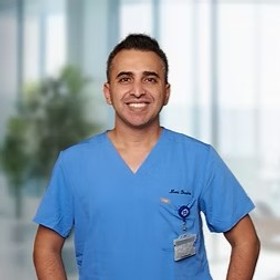
Dr. Meni Brakha
Expert in complex oncological surgery Melanoma, sarcoma and rare tumors
Surgical oncologyRecommended Reviews for Dr. Meni Brakha
פנחס
, תל אביב
5.0
''I live in Tel Aviv, and my story with melanoma began several years ago. I was diagnosed and operated on at one of the major hospitals in the central region, including excision of the melanoma and a sentinel lymph node biopsy. I was told at the time that the sentinel node was clear, and I left that experience feeling that the disease was behind me.
Later on, I discovered a lump in the area of my lymph nodes, and unfortunately the tests showed that it was a regional recurrence of the melanoma in the node. Beyond the fear of the recurrence itself, it was hard for me to understand how this had happened after the sentinel node biopsy had come back negative. The question also arose of whether the node sampled in the first surgery had indeed been the correct node draining the melanoma area, but at that stage, of course, it was no longer possible to know exactly what had happened.
During the first treatment and the workup of the recurrence, I went between several doctors and clinics. They were all good in their fields, but I felt there was no single person who was my point of contact for melanoma and who held the full picture in mind — from the original surgery and pathology, through the imaging and oncological treatment, to the question of whether, when, and how the lymph nodes should be operated on. Even in the first surgery itself at the center, doctors from several different departments were involved, and there was a feeling that it wasn't managed well enough.
Following a recommendation, I came to Dr. Guy Ben-Betzalel [note: name kept as in source — 'Dr. Mani Barcha'], an oncological surgeon and melanoma surgeon at Hadassah. Already at the first meeting I felt an enormous difference. He went in depth over all the material from the previous diagnosis and surgery, personally reviewed the imaging, and explained to me the significance of a melanoma recurrence in the lymph nodes and of stage III disease, as well as the treatment options available today.
What impressed me especially was that he did not rush to take me into surgery. My case was discussed by the multidisciplinary melanoma team at Hadassah, and it was decided to start specifically with immunotherapy before surgery — neoadjuvant treatment — and only afterward to perform the lymph node surgery according to the response to treatment.
Looking back, I understood how important it is for the surgeon who operates on melanoma to also deeply understand modern oncological treatment, and not to treat the surgery as a standalone event. For the first time, I felt that there was someone coordinating my entire treatment, and that there was genuine teamwork between surgery, oncology, imaging, and pathology.
The immunotherapy went excellently and the response was very good. Throughout the process I felt that Dr. Barcha knew exactly where things stood and what the next step was. When the time came for surgery, he explained to me exactly what was going to be done in the lymph node area, what the risks of the surgery were, and what could be done to minimize complications as much as possible.
The surgery itself went amazingly well. Despite my concerns about a significant lymph node surgery, the recovery was very good, the incision healed nicely, and the result was much better than I had imagined. Dr. Barcha was there after the surgery as well, went over the pathology report with me in an organized way, and explained how it connected to the response to the immunotherapy and what it meant for the continuation of treatment and follow-up.
It's hard to explain how significant it is for a patient with complex melanoma to feel that he has one point of contact who truly understands the whole picture. Not just an excellent surgeon, and not just a doctor familiar with the literature, but someone who knows how to connect the pathology, oncology, imaging, and surgery, and to work as part of a multidisciplinary melanoma team.
I live in the central region, and for the first surgery it was natural for me to choose a hospital close to home. After everything I went through, that is perhaps the only thing I regret. Jerusalem is, after all, a relatively short trip, and I wish I had made that trip already when the melanoma was first diagnosed, and had come to Dr. Mani Barcha even for the original surgery and the sentinel node biopsy.
After a melanoma recurrence, you understand that the important question is not only where it's most convenient to have surgery, but who the doctor is that you want managing the disease with you if things become complex.
To everyone dealing with melanoma, and especially to those diagnosed with melanoma in the lymph nodes, a melanoma recurrence after previous surgery, or who need to make a decision regarding immunotherapy and lymph node surgery, I wholeheartedly recommend Dr. Mani Barcha and the melanoma team at Hadassah.
And to those who live in Tel Aviv or the central region and are hesitant because of the distance — from my experience today, the trip to Jerusalem is a very minor consideration compared to the importance of reaching the right doctor and the right team.
09/03/2026
Treatment type: Melanoma treatment | Metastatic melanoma | Axillary Lymph Node Dissection | Resection Of Malignant Melanoma Of The Head And Neck | Melanoma Excision
Automatic translation
יפית
, שרעבי
5.0
''After receiving a pathology report confirming a new melanoma on my arm, I felt lost and confused, not knowing what the next step would be. I was looking for a surgeon who specializes specifically in melanoma, not just a general or plastic surgeon who performs excisions. After considerable research and inquiries, I eventually found Dr. Meni Bracha's clinic in Ramat Gan. He is an oncological surgeon at Hadassah Ein Kerem, a world-class melanoma specialist with an outstanding reputation.
Already in our first meeting, Dr. Bracha thoroughly reviewed the pathology report with me and explained the significance of the melanoma's thickness, its ulceration, and the mitoses. He explained the required wide excision and the oncological nuances involved. He also discussed with me the need, in my case, for a sentinel lymph node biopsy (he personally calculated the risk of lymph node involvement for me), the stages of the surgery which he performs entirely himself, and the expected follow-up. He explained at length the implications of each possible outcome, addressing the margins, the cosmetic appearance, functionality, and further oncological treatment. During the conversation, I got the impression that he is not only a warm and empathetic individual but, above all, a true professional who is deeply knowledgeable about the biology of this disease and attentive to every possible detail. This made me feel confident that I was in remarkable hands.
Subsequently, I underwent surgery performed by Dr. Bracha at Hadassah Ein Kerem Hospital, where he carried out a wide excision of the melanoma and a sentinel lymph node biopsy. It was clear to me that the entire surgery was performed by him, not by a resident, and without the assistance of physicians from other disciplines. Personally, that fact made all the difference to me. The surgery went smoothly, the compassionate care throughout the day from the entire team, led by Dr. Bracha, was remarkable, and I was discharged home that same day.
Fortunately, the excision margins were clear, the melanoma had not reached the sentinel lymph node, and I am a healthy person today. My recovery from the surgery was excellent, with no complications and no setbacks, and the cosmetic result was simply outstanding, with a delicate and very beautiful scar that is barely visible. Dr. Bracha was available on his personal phone throughout the entire process, looked after my well-being, and is a true example of patient care and empathy. Beyond his professionalism and remarkable knowledge, Dr. Bracha gave me the sense that there was someone looking at the complete oncological and surgical picture with deep understanding, truly accompanying me, and not merely a 'technician' focused on the technical aspects of things.
I wholeheartedly recommend him to anyone who has received a new melanoma diagnosis and is looking for a professional, knowledgeable, thorough, compassionate, available, and caring oncological surgeon and melanoma specialist.
07/12/2026
Treatment type: Melanoma Excision | Sentinel Lymph Node Disection | Slnb | Resection Of Malignant Melanoma Of The Head And Neck | Axillary Lymph Node Dissection
Automatic translation
שגיא
, דימונה
5.0
''I had the privilege to meet and be treated by a rare doctor, one in a generation.
A doctor who is first and foremost kind, humane, patient, and a top professional.
I was operated on by the doctor to remove a large tumor from the sarcoma family from my left thigh.
Dr. Meni is a professional and expert of the highest order. He is an expert with knowledge and professionalism in everything, everything I asked was answered with an amazing level of knowledge and expertise and with unusual speed.
You will not find a better expert than him for any issue that requires treatment, but it is clear that regarding all soft tissue tumors and sarcomas he is number 1.
I am grateful to God who directed me to him when the sarcoma was discovered and after the surgery and treatment I received and continue to receive from him, I have no rest from thanking him.
Thank you Dr. Meni, who will undoubtedly soon be Professor Meni!!!
05/20/2026
Treatment type: Wide Resection Of Soft Tissue Sarcoma | Soft Tissue Sarcoma | Liposarcoma | Lipomas Excision | Tumor Resection
Automatic translation
About Dr. Meni Brakha
Position
Senior physician in the Department of Oncological Surgery at Hadassah Ein Kerem Hospital, Jerusalem
License ID
141375
Speciality
Oncological Surgery - Melanoma, Sarcoma and Rare Tumors
Other Specialties
Soft tissue tumors, complex surgeries for metastasis removal in limbs and soft tissues, complex tissue reconstructions using skin flaps, metastatic melanoma, metastatic sarcoma, NET tumors.
Description
Dr. Meni Brakha, an oncological surgeon specializing in melanoma and sarcoma operations, leads the melanoma and sarcoma surgery department at Hadassah Ein Kerem as part of a broad multidisciplinary team. A graduate of official fellowship training at Peter MacCallum Cancer Centre (Australia) and training at Moffitt Cancer Center in Tampa, USA. An expert in wide excisions of melanoma and advanced reconstructions (oncoplastics), sentinel lymph node biopsy, extensive lymph node dissection, excision of soft tissue tumors and sarcomas throughout the body (including retroperitoneum, limb-sparing surgeries, and advanced local treatments such as isolated limb perfusion chemotherapy in cases of metastatic melanoma or attempts to preserve limbs in sarcoma diagnosis. Performs all surgical components personally with emphasis on human and empathetic treatment, aspiration for optimal oncological healing and reduction of complication risk as much as possible.
Professional Experience
Senior physician in the oncological surgery department at Hadassah Ein Kerem Hospital, Jerusalem
Extended specialization in oncological surgery, with emphasis on melanoma, sarcoma and rare tumors at one of the leading cancer centers in the world - Peter MacCallum Cancer Center in Melbourne, Australia.
Training in oncological surgery at Moffitt Cancer Center in Tampa, Florida, USA.
Specialization in general surgery at Ichilov Hospital
Engagement in laboratory research in the field of oncological surgery, and partner in several international clinical research initiatives in the field of melanoma and sarcoma.
Permanent panel member in a global forum for discussion of complex sarcoma cases
Manager of sarcoma forum for questions on complex cases - https://www.doctors.co.il/forum-6382
Education
Medical studies at the Hebrew University of Jerusalem
Membership
Australian College of Surgeons
American Society of Surgical Oncology - SSO
American Society of Clinical Oncology - ASCO
Sentinel Lymph Node Working Group
European Society for Medical Oncology - ESMO
TARPSWG - World Association of Sarcoma Surgery Specialists
Surgeons Association
Israeli Association for Melanoma and Skin Cancer
Languages
Hebrew
English
Treatments
Cutaneous melanoma – diagnosis and surgery: wide excision, skin reconstruction (oncoplastics), sentinel lymph node biopsy, margin management.
Melanoma with lymph node involvement - radical lymph node dissection.
Sarcomas (limb/body/Retroperitoneal): surgical planning for limb/organ preservation.
Retroperitoneal Sarcoma.
Rare skin tumors (Merkel/DFSP/NMSC high-risk) and rare soft tissue tumors.
Dermatofibrosarcoma - DFSP.
Desmoid fibromatosis - Desmoid Tumor.
Kaposi sarcoma - lesion excision, intratumoral chemotherapy injection as an alternative to intravenous chemotherapy.
Breast phyllodes tumor - clinical and imaging assessment, precise surgical planning, personalized surgeries with aesthetic considerations.
Metastatic melanoma - treatment of in-transit metastases and soft tissue metastases.
Isolated Limb Infusion - infusion of chemotherapy to the limb only for limb preservation in cases of metastatic melanoma in the limb or limb sarcoma.
Second opinion before surgery or after partial/incomplete surgery in the field of melanoma and sarcoma.
Surgeries
Melanoma Surgery - Malignant Melanoma
Wide excision of melanoma with complex reconstructions when required for excellent cosmetic results (oncoplastics).
Sentinel lymph node biopsy, with precise localization and identification of the lymph node, in an attempt to improve disease control and refine treatment.
Radical lymphadenectomy
In-transit melanoma resection.
Robotic pelvic lymphadenectomy.
Skin flaps for reconstruction (alternative to skin graft with significantly better cosmetic results and fewer complications compared to grafts).
Primary biopsy of suspicious lesions in skin and soft tissues.
Surgery for resection of melanoma metastases in internal organs.
Consultation and second opinion for complex cases with primary or metastatic disease.
Complex surgeries for other skin tumors.
Axillary dissection/lymphadenectomy, specialized surgery for melanoma with involvement of deep lymph nodes (element not performed in lymph node surgery for breast cancer).
Inguinal lymphadenectomy/groin dissection - complex surgery with removal of all lymph nodes in the groin in one block, attempting to minimize the chances of local/regional disease recurrence.
Pelvic lymphadenectomy - performing the surgery both through open approach and robotically, decision made for each individual case with attempt for maximal control of regional disease.
Resection of melanoma metastases for production of personalized autologous vaccine in cases of inability to receive immunotherapy, and after discussion and evaluation by our comprehensive melanoma team.
Neck dissection of lymph nodes in cases of metastatic melanoma in cervical lymph nodes, when indicated.
Surgery for resection of hepatic metastases of uveal melanoma.
Sarcoma surgeries - Soft Tissue Sarcoma
Resection of retroperitoneal sarcoma - tailoring specific surgery to the precise sarcoma subtype, with attempt to preserve organs without oncological compromise.
Resection of dermatofibrosarcoma protuberans (DFSP) throughout the body, with optimal oncological outcomes and emphasis on cosmetic aspects.
Desmoid tumor surgeries - meticulous assessment of disease status, often healing without any surgery, desmoid surgeries when indicated with attention to cosmetic elements.
Cutaneous sarcomas of the scalp, head and neck - surgeries for Pleomorphic Dermal Sarcoma and other cutaneous sarcomas such as Leiomyosarcoma.
Metastatic sarcoma in the abdominal cavity - especially after unsuccessful primary surgery performed previously, with attention to disease biology and meticulous assessment in attempt to achieve cure when possible.
Isolated Limb Infusion of chemotherapy in minimally invasive approach, for limb preservation in cases of limb sarcoma requiring amputation.
Angiosarcoma surgeries, including cases of radiation-induced angiosarcoma.
Breast phyllodes tumor - complete assessment before surgery, tailoring the required surgical type to tumor grade, breast-conserving surgeries and oncoplasty.
Liposarcoma/Atypical Lipomatous Tumor - surgeries for liposarcoma tumors throughout the body, including extremities, chest, abdominal wall. Limb-sparing surgeries, with local cosmetic reconstructions (oncoplasty).
GIST surgeries - surgeries for both primary tumor and metastatic disease when control cannot be achieved at disease site with drug therapy.
Retroperitoneal Leiomyosarcoma - extensive experience in complex surgeries for leiomyosarcoma resection, sometimes requiring resection of major blood vessels to achieve cure and vascular reconstruction with grafts. Surgeries are performed as part of the comprehensive sarcoma team with full interdisciplinary cooperation to achieve optimal results.
Kaposi Sarcoma - surgeries for sarcoma and lesion resection when indicated, alternatively local injection of chemotherapy into the tumor (without systemic effects) with excellent results.
Initial assessment and thorough investigation of new soft tissue mass appearance - targeted imaging, decision on biopsy method, expediting investigation when necessary and building personalized treatment and surgical plan.
Surgeries for benign lipomas and advanced lipomas, including complex cases.
Merkel Cell Carcinoma - Merkel Cell Carcinoma
Evaluation of Merkel cell tumor - sometimes the decision that surgery is not necessary with identical chances of healing, sometimes the need for tumor removal.
Sentinel lymph node sampling in Merkel cell carcinoma - a critical element in treatment with the need for accurate identification of the lymph node, for the purpose of deciding on radiation delivery to the lymph node area in order to control the disease and prevent its progression.
Surgeries for metastases of Merkel cell carcinoma, mainly along the limbs but also in soft tissues.
Surgery for Peripheral Nerve Tumors - Peripheral Nerve Tumors
Assessment and analysis directed at Malignant Peripheral Nerve Sheath Tumor (MPNST).
Wide excision of neural tumors with neurovascular preparation.
Surgery for schwannoma tumors.
Surgery for neurofibroma and neurofibromatosis tumors.
Surgery for perineurioma tumors.
Surgery for granular cell tumors.
Surgery for rare non-melanoma skin tumors - Non-Melanoma Rare Skin Cancers
Surgery for Porocarcinoma tumor.
Surgery for Adnexal Skin Tumors and hair follicle tumors.
Surgery for Sebaceous Carcinoma.
Surgery for advanced Squamous Cell Carcinoma.
Surgery for rare cutaneous sarcomas including Pleomorphic Dermal Sarcoma and Undifferentiated Pleomorphic Sarcoma.
Surgery for Retroperitoneal Sarcoma - Retroperitoneal Sarcoma
Planned multivisceral resections.
Margin planning and organ-sparing procedures depending on the specific biology of the disease and individualized treatment plan.
Combined surgeries with major vascular resections and vascular reconstructions.
Surgeries for retroperitoneal liposarcoma.
Surgeries for retroperitoneal leiomyosarcoma.
Surgeries for retroperitoneal solitary fibrous tumor.
Surgeries for small round blue cell tumors of the retroperitoneum.
Surgeries for malignant peripheral nerve sheath tumor.
Surgeries for all malignant and benign tumors of the retroperitoneum.
Surgery for metastatic retroperitoneal sarcoma.
Locations
* You can also schedule an appointment at the clinic by calling 02-6778899
Hadassah Medical - Sports Hero Center, Menachem Begin Street 7, Ramat Gan, 5268102
* You can also schedule an appointment at the clinic by calling 02-6778899
Tel Aviv
Media
Insurance Accepted by Dr. Meni Brakha
















In full arrangement with all insurance companies and all health funds (Shaban)
Press - Dr. Meni Brakha

Dr. Meni Brakha- How to identify the rare cancer sarcoma before it is too late?
How to identify the rare cancer sarcoma before it is too late?

Surgical approaches in melanoma. By Dr. Meni Brakha- specialist in oncological surgery.
From a patient conference of the Israeli Skin Cancer Association and the Sharett Institute of Oncology at Hadassah Ein Kerem Medical Center.

Skin melanoma: what is important to know
As a surgeon specializing in melanoma treatment, I see great importance in raising awareness about this disease. Melanoma is a dangerous type of skin cancer that develops in melanocyte cells - the cells responsible for producing pigment in the skin

What is retroperitoneal sarcoma?
Retroperitoneal sarcoma is a rare type of cancer that develops in the retroperitoneum, an area in the abdomen located behind the peritoneum, the tissue that lines the abdominal cavity. The retroperitoneum contains several vital organs, including the kidneys, pancreas, and major blood vessels. Due to its location, tumors in this area can grow to very large dimensions before they cause noticeable symptoms.
Reviews of Dr. Meni Brakha (123)
Your trust is the most important thing so doctors can not pay to change or delete the review.
Overall rating of Dr. Meni Brakha
5.0Based on 123 reviews
Show by medical issue or treatment type
שרית אליהו
, ירושלים
5.0
''A calming doctor who instills confidence.
He explained all the details in the clearest way.
Courteous and pleasant. His attitude made the whole experience easier.
He was available for questions and got back with answers.
I felt throughout the entire process that I was in good and professional hands.
09/23/2026
Treatment type: Sentinel Lymph Node Disection | Second medical opinion melanoma | Slnb | Melanoma Excision | Melanoma treatment
Automatic translation
יהורם טובים
, תל אביב
5.0
''When I was told that I had mucosal melanoma in the small intestine, I understood fairly quickly that this was not an ordinary case. This is a very rare tumor, and in such a situation you're not just looking for a good surgeon – you want an oncological surgeon who understands melanoma, understands oncological treatment, and knows how to connect all the pieces of the picture.
This is how I came to Dr. Meni Bracha at Hadassah Ein Kerem.
Already from the first meeting I felt that I was in the right place. Dr. Bracha had deep knowledge of the disease and the treatment options, went through my case with me in an organized manner, and explained to me not only what could be operated on, but also when it would be right to operate and what the place of surgery is within the overall oncological treatment.
In my case I received neoadjuvant treatment before the surgery, and fortunately there was a good response to the treatment. One of the things that impressed me greatly was that Dr. Bracha's thinking was not that of a surgeon who only looks at the surgical procedure. He looked at the entire course of the disease, at the response to treatment, and at the way in which the surgery could be timed and performed in the best and most precise manner.
In the end, he performed the surgery using a laparoscopic approach. Despite all the fears I had before an oncological surgery in the intestine, the surgery went simply amazingly and without any complications. The recovery was excellent, and in retrospect it's hard for me to describe how much better the actual experience was compared to what I imagined when I first heard the diagnosis.
But in my view, what distinguishes Dr. Meni Bracha is not only his surgical ability. I felt that I was facing a doctor who thinks like both an oncologist and a surgeon at the same time – who understands melanoma deeply, knows how to deal with rare tumors and unusual cases, and makes decisions based on a broad perspective and not only on the question of whether it is technically possible to perform surgery.
Alongside all this, he is a pleasant, patient, accessible person who is very down to earth. At every stage I knew what was happening and why, I could ask anything and receive a real and clear answer, and I had the feeling that he truly took responsibility for the case and not just for the surgery itself.
After what I went through, if someone told me they had been diagnosed with a complex or rare melanoma, mucosal melanoma, a tumor of the small intestine, or a case where a decision needs to be made on how to combine oncological treatment with surgery, I would tell them without hesitation to turn to Dr. Meni Bracha. I happened to research the field of melanoma treatment in Israel extensively in recent months, and I can say from my personal experience that Dr. Bracha is a leader in his field, and not only on a national level. I am grateful that I was given the opportunity to share my personal experience, the journey we went through, and especially my perspective on something I never imagined would come my way.
I feel that I was very lucky to have come to him, and I thank him greatly for the treatment, for the surgery, and for his extraordinary humanity and sensitivity.
09/09/2026
Treatment type: Metastatic melanoma | Melanoma Excision | Melanoma treatment | Small Bowel Cancer | Surgery of soft tissue tumors (Benign, malignant, and soft tissue sarcomas)
Automatic translation
יהורם טובים
, תל אביב
5.0
''When I was told that I had mucosal melanoma in the small intestine, I understood fairly quickly that this was not an ordinary case. This is a very rare tumor, and in such a situation you are not just looking for a good surgeon – you want an oncological surgeon who understands melanoma, understands oncological treatment, and knows how to connect all the pieces of the picture.
That is how I came to Dr. Meni Bracha at Hadassah Ein Kerem.
Already from the first meeting I felt that I was in the right place. Dr. Bracha had a deep understanding of the disease and the treatment options, went through my case with me in an organized manner, and explained to me not only what could be operated on, but also when it was right to operate and what the place of surgery was within the overall oncological treatment.
In my case I received neoadjuvant treatment before the surgery, and fortunately there was a good response to the treatment. One of the things that impressed me greatly was that Dr. Bracha's thinking was not that of a surgeon who looks only at the surgical procedure. He looked at the entire course of the disease, at the response to treatment, and at the way in which the surgery could be timed and performed in the best and most precise manner.
In the end, he performed the surgery using a laparoscopic approach. Despite all the concerns I had before an oncological surgery in the intestine, the surgery went simply amazingly and without any complications. The recovery was excellent, and in retrospect it is hard for me to describe how much better the actual experience was than what I imagined when I first heard the diagnosis.
But for me, what distinguishes Dr. Meni Bracha is not only his surgical ability. I felt that I was facing a doctor who thinks like an oncologist and like a surgeon at the same time – who understands melanoma deeply, knows how to deal with rare tumors and unusual cases, and makes decisions based on a broad perspective and not only on the question of whether it is technically possible to perform surgery.
Alongside all this, he is a pleasant, patient, accessible person, very much at eye level. At every stage I knew what was happening and why, I could ask anything and receive a real and clear answer, and I had a feeling that he truly took responsibility for the case and not just for the surgery itself.
After what I went through, if someone told me they had been diagnosed with a complex or rare melanoma, mucosal melanoma, a tumor of the small intestine, or a case in which one needs to decide how to combine oncological treatment with surgery, I would tell them without hesitation to turn to Dr. Meni Bracha. I happened to research extensively in recent months the field of melanoma treatment in Israel, and I can say from my personal experience that Dr. Bracha is a leader in his field, and not only on the national level. I am grateful that I was given the opportunity to share my personal experience, the path we went through, and above all my perspective on something I never imagined would come my way.
I feel that I was very fortunate to have come to him, and I thank him very much for the treatment, for the surgery, and for the extraordinary humanity and sensitivity.
09/09/2026
Treatment type: Metastatic melanoma | Melanoma Excision | Melanoma treatment | Small Bowel Cancer | Surgery of soft tissue tumors (Benign, malignant, and soft tissue sarcomas)
Automatic translation
פנחס
, תל אביב
5.0
''I live in Tel Aviv, and my story with melanoma began several years ago. I was diagnosed and operated on at one of the major hospitals in the central region, including excision of the melanoma and a sentinel lymph node biopsy. I was told at the time that the sentinel node was clear, and I left that experience feeling that the disease was behind me.
Later on, I discovered a lump in the area of my lymph nodes, and unfortunately the tests showed that it was a regional recurrence of the melanoma in the node. Beyond the fear of the recurrence itself, it was hard for me to understand how this had happened after the sentinel node biopsy had come back negative. The question also arose of whether the node sampled in the first surgery had indeed been the correct node draining the melanoma area, but at that stage, of course, it was no longer possible to know exactly what had happened.
During the first treatment and the workup of the recurrence, I went between several doctors and clinics. They were all good in their fields, but I felt there was no single person who was my point of contact for melanoma and who held the full picture in mind — from the original surgery and pathology, through the imaging and oncological treatment, to the question of whether, when, and how the lymph nodes should be operated on. Even in the first surgery itself at the center, doctors from several different departments were involved, and there was a feeling that it wasn't managed well enough.
Following a recommendation, I came to Dr. Guy Ben-Betzalel [note: name kept as in source — 'Dr. Mani Barcha'], an oncological surgeon and melanoma surgeon at Hadassah. Already at the first meeting I felt an enormous difference. He went in depth over all the material from the previous diagnosis and surgery, personally reviewed the imaging, and explained to me the significance of a melanoma recurrence in the lymph nodes and of stage III disease, as well as the treatment options available today.
What impressed me especially was that he did not rush to take me into surgery. My case was discussed by the multidisciplinary melanoma team at Hadassah, and it was decided to start specifically with immunotherapy before surgery — neoadjuvant treatment — and only afterward to perform the lymph node surgery according to the response to treatment.
Looking back, I understood how important it is for the surgeon who operates on melanoma to also deeply understand modern oncological treatment, and not to treat the surgery as a standalone event. For the first time, I felt that there was someone coordinating my entire treatment, and that there was genuine teamwork between surgery, oncology, imaging, and pathology.
The immunotherapy went excellently and the response was very good. Throughout the process I felt that Dr. Barcha knew exactly where things stood and what the next step was. When the time came for surgery, he explained to me exactly what was going to be done in the lymph node area, what the risks of the surgery were, and what could be done to minimize complications as much as possible.
The surgery itself went amazingly well. Despite my concerns about a significant lymph node surgery, the recovery was very good, the incision healed nicely, and the result was much better than I had imagined. Dr. Barcha was there after the surgery as well, went over the pathology report with me in an organized way, and explained how it connected to the response to the immunotherapy and what it meant for the continuation of treatment and follow-up.
It's hard to explain how significant it is for a patient with complex melanoma to feel that he has one point of contact who truly understands the whole picture. Not just an excellent surgeon, and not just a doctor familiar with the literature, but someone who knows how to connect the pathology, oncology, imaging, and surgery, and to work as part of a multidisciplinary melanoma team.
I live in the central region, and for the first surgery it was natural for me to choose a hospital close to home. After everything I went through, that is perhaps the only thing I regret. Jerusalem is, after all, a relatively short trip, and I wish I had made that trip already when the melanoma was first diagnosed, and had come to Dr. Mani Barcha even for the original surgery and the sentinel node biopsy.
After a melanoma recurrence, you understand that the important question is not only where it's most convenient to have surgery, but who the doctor is that you want managing the disease with you if things become complex.
To everyone dealing with melanoma, and especially to those diagnosed with melanoma in the lymph nodes, a melanoma recurrence after previous surgery, or who need to make a decision regarding immunotherapy and lymph node surgery, I wholeheartedly recommend Dr. Mani Barcha and the melanoma team at Hadassah.
And to those who live in Tel Aviv or the central region and are hesitant because of the distance — from my experience today, the trip to Jerusalem is a very minor consideration compared to the importance of reaching the right doctor and the right team.
09/03/2026
Treatment type: Melanoma treatment | Metastatic melanoma | Axillary Lymph Node Dissection | Resection Of Malignant Melanoma Of The Head And Neck | Melanoma Excision
Automatic translation
פנחס
, תל אביב
5.0
''I live in Tel Aviv, and my story with melanoma began several years ago. I was diagnosed and operated on at one of the large hospitals in the central region, including excision of the melanoma and a sentinel lymph node biopsy. I was told at the time that the sentinel node was clear, and I left that experience feeling that the disease was behind me.
Later on, I discovered a lump in the lymph node area, and unfortunately the tests showed that it was a regional recurrence of melanoma in the node. Beyond the fear of the recurrence itself, it was hard for me to understand how this happened after the sentinel node biopsy had been negative. The question also arose whether the node that was sampled in the first surgery was indeed the correct node draining the melanoma area, but at that stage, of course, it was no longer possible to know exactly what had happened.
During the first treatment and the workup of the recurrence, I went between several doctors and clinics. They were all good in their fields, but I felt there was no single person who was my address for melanoma and who held the full picture in mind — from the original surgery and pathology, through the imaging and oncological treatment, to the question of whether, when, and how the lymph nodes should be operated on. Even in the first surgery itself at the center, doctors from several different departments participated, and there was a feeling that it was not sufficiently coordinated.
Following a recommendation, I reached Dr. Motti Bracha, an oncological surgeon and melanoma surgeon at Hadassah. Already at the first meeting I felt a huge difference. He went in depth over all the material from the previous diagnosis and surgery, personally looked at the imaging, and explained to me the significance of a melanoma recurrence in the lymph nodes and of stage III disease, and what treatment options exist today.
What impressed me especially was that he did not rush to take me to surgery. My case was discussed in Hadassah's multidisciplinary melanoma team, and it was decided to start with immunotherapy before the surgery — neoadjuvant treatment — and only afterward to perform the lymph node surgery according to the response to treatment.
In hindsight, I understood how important it is for the surgeon operating on melanoma to also deeply understand modern oncological treatment, and not to treat the surgery as a standalone event. For the first time, I felt that there was someone coordinating my entire treatment for me, and that there was genuine teamwork between surgery, oncology, imaging, and pathology.
The immunotherapy went excellently and the response was very good. Throughout the entire process, I felt that Dr. Bracha knew exactly where things stood and what the next step was. When the time for surgery came, he explained to me exactly what was going to be done in the lymph node area, what the risks of the surgery were, and what could be done to minimize complications as much as possible.
The surgery itself went amazingly well. Despite the concerns I had about a significant lymph node surgery, the recovery was very good, the incision healed nicely, and the result was much better than I had imagined. Dr. Bracha was there after the surgery as well, went through the pathology report with me in an organized manner, and explained how it connected to the response to the immunotherapy and what it meant for continued treatment and follow-up.
It is hard to explain how meaningful it is for a patient with complex melanoma to feel that he has one address that truly understands the whole picture. Not just an excellent surgeon, and not just a doctor familiar with the literature, but someone who knows how to connect the pathology, oncology, imaging, and surgery, and to work as part of a multidisciplinary melanoma team.
I live in the central region, and for the first surgery it was natural for me to choose a hospital close to home. After everything I went through, that is perhaps the only thing I regret. Jerusalem is, after all, a relatively short trip, and I wish I had made it already when the melanoma was first diagnosed, and had reached Dr. Motti Bracha even for the original surgery and the sentinel node biopsy.
After a melanoma recurrence, you understand that the important question is not only where it is most convenient to undergo surgery, but who is the doctor you want managing the disease with you if things become complicated.
To everyone dealing with melanoma, and especially to anyone who has been diagnosed with melanoma in the lymph nodes, a recurrence of melanoma after a previous surgery, or who needs to make a decision regarding immunotherapy and lymph node surgery, I wholeheartedly recommend Dr. Motti Bracha and the melanoma team at Hadassah.
And to anyone living in Tel Aviv or the central region who is hesitant because of the distance — from my experience today, the trip to Jerusalem is a very small consideration compared to the importance of reaching the right doctor and the right team.
09/03/2026
Treatment type: Melanoma treatment | Metastatic melanoma | Axillary Lymph Node Dissection | Resection Of Malignant Melanoma Of The Head And Neck | Melanoma Excision
Automatic translation
רנה
, ירושלים
4.9
''The doctor and surgeon, by the grace of the Almighty, and also the person, the attitude is amazing, attentive, calming, the most personal and professional, accordingly also the performance of the surgery and the follow-up. I am grateful! It should be noted that my son is on the spectrum and very anxious, but the approach, patience, and treatment of Dr. Meni worked wonders! The professionalism and level of the surgery are of the highest quality, wonderful work!
08/27/2026
Treatment type: Soft Tissue Tumor Excision
Automatic translation
שרונה תגר
, עשרת
5.0
''An excellent doctor, accessible!!!! Humane - a truly rare breed
07/20/2026
Automatic translation
יאיר לורברבוים
, ירושלים
5.0
''I was referred to Dr. Mani Bracha by a plastic surgeon at a health maintenance organization after melanoma was discovered in me. The doctor explained to me that he is one of the only physicians in the country who specializes in all aspects of this disease. I contacted Dr. Bracha through the private medical service and he immediately scheduled surgery for me without delay. At the preliminary meeting, he explained in detail the nature of the disease, the behavior of the tumor, and the procedure I was about to undergo. His explanation, and his approach in general, put me and my family at ease. He explained to me that I needed to undergo a 'melanoma excision' surgery as well as a 'sentinel lymph node biopsy' to determine whether the lesion had spread to the lymphatic system.
I should note that Dr. Bracha was available at every stage of the treatment for any question (both by phone and WhatsApp messages).
His management and treatment were excellent, and so were their results!
07/13/2026
Automatic translation
שלמה
, ירושלים
5.0
''The treatment I received from Dr. Meni Bracha included an initial consultation, surgery, and post-operative follow-up. Throughout all these stages, I felt his professional approach, personal care, thoroughness, and dedication. Highly recommended!
07/12/2026
Automatic translation
יפית
, שרעבי
5.0
''After receiving a pathology report confirming a new melanoma on my arm, I felt lost and confused, not knowing what the next step would be. I was looking for a surgeon who specializes specifically in melanoma, not just a general or plastic surgeon who performs excisions. After considerable research and inquiries, I eventually found Dr. Meni Bracha's clinic in Ramat Gan. He is an oncological surgeon at Hadassah Ein Kerem, a world-class melanoma specialist with an outstanding reputation.
Already in our first meeting, Dr. Bracha thoroughly reviewed the pathology report with me and explained the significance of the melanoma's thickness, its ulceration, and the mitoses. He explained the required wide excision and the oncological nuances involved. He also discussed with me the need, in my case, for a sentinel lymph node biopsy (he personally calculated the risk of lymph node involvement for me), the stages of the surgery which he performs entirely himself, and the expected follow-up. He explained at length the implications of each possible outcome, addressing the margins, the cosmetic appearance, functionality, and further oncological treatment. During the conversation, I got the impression that he is not only a warm and empathetic individual but, above all, a true professional who is deeply knowledgeable about the biology of this disease and attentive to every possible detail. This made me feel confident that I was in remarkable hands.
Subsequently, I underwent surgery performed by Dr. Bracha at Hadassah Ein Kerem Hospital, where he carried out a wide excision of the melanoma and a sentinel lymph node biopsy. It was clear to me that the entire surgery was performed by him, not by a resident, and without the assistance of physicians from other disciplines. Personally, that fact made all the difference to me. The surgery went smoothly, the compassionate care throughout the day from the entire team, led by Dr. Bracha, was remarkable, and I was discharged home that same day.
Fortunately, the excision margins were clear, the melanoma had not reached the sentinel lymph node, and I am a healthy person today. My recovery from the surgery was excellent, with no complications and no setbacks, and the cosmetic result was simply outstanding, with a delicate and very beautiful scar that is barely visible. Dr. Bracha was available on his personal phone throughout the entire process, looked after my well-being, and is a true example of patient care and empathy. Beyond his professionalism and remarkable knowledge, Dr. Bracha gave me the sense that there was someone looking at the complete oncological and surgical picture with deep understanding, truly accompanying me, and not merely a 'technician' focused on the technical aspects of things.
I wholeheartedly recommend him to anyone who has received a new melanoma diagnosis and is looking for a professional, knowledgeable, thorough, compassionate, available, and caring oncological surgeon and melanoma specialist.
07/12/2026
Treatment type: Melanoma Excision | Sentinel Lymph Node Disection | Slnb | Resection Of Malignant Melanoma Of The Head And Neck | Axillary Lymph Node Dissection
Automatic translation
...
Frequently Asked Questions
What is sentinel lymph node biopsy in melanoma and when is it needed? (SLNB)
Sentinel lymph node biopsy checks whether melanoma cells have spread to the first lymph node draining the tumour area. It is usually performed when melanoma thickness exceeds ~0.8 mm, or in thinner melanomas with ulceration or high-risk features. The procedure is used for staging and guiding further treatment. Surgery is performed together with wide local excision, usually under general anaesthesia, using lymphoscintigraphy and a dye/tracer.
What are the excision margins in melanoma and why do they vary? (Wide Local Excision margins)
The margin removed around a melanoma is determined by the Breslow thickness. For in-situ melanoma 5 mm margins are required; for thin melanoma 1 cm; for thick melanomas usually 2 cm. The goal is optimal local control without unnecessary functional or aesthetic compromise. In sensitive locations (face, hand/foot, ear) oncoplastic planning is required.
A positive sentinel node was found — is complete lymph node dissection mandatory? (CLND)
Today, complete lymph node dissection is not the default in every positive case. In many cases the preference is careful surveillance with periodic ultrasound of the lymphatic region and consideration of adjuvant immunotherapy according to stage and tumour characteristics. This reduces lymphoedema complications without compromising oncological outcomes.
What is ILI/ILP — Isolated Limb Infusion/Perfusion in limb melanoma and when is it considered?
ILI or ILP are regional treatment procedures for in-transit melanoma or multiple limb lesions not amenable to simple excision or insufficiently responsive to systemic treatment. Blood flow to the limb is isolated briefly and a high-concentration chemotherapy drug is infused through catheters, achieving high local response while minimising systemic exposure. Goals: limb preservation, disease burden reduction and quality-of-life improvement.
I was diagnosed with metastatic melanoma — is surgery still an option?
Metastatic melanoma does not always mean there is no surgical option. There are two main arms: advanced systemic treatments (immunotherapy and targeted therapy) that can achieve disease control or even disappearance of certain metastases; and focused oncological surgery — in selected cases with isolated lesion(s) or limited disease burden, complete surgical removal can be considered as part of the overall treatment.
Soft-tissue sarcoma — how to start the workup correctly?
For any deep mass over 5 cm or rapidly growing mass, sarcoma should be suspected and MRI performed for precise assessment of extent and involvement of muscles, nerves and vessels. Core-needle biopsy must be performed by a coordinated sarcoma team, along a tract that can be excised in future surgery — to avoid unplanned excision which increases recurrence risk. After diagnosis, a Tumour Board determines the strategy: surgery to negative margins with/without radiation/chemotherapy according to histology, grade and location.
Retroperitoneal sarcoma — how is surgery different and why is a specialised centre important?
Retroperitoneal sarcomas are situated close to vital organs (kidney, pancreas, bowel, major vessels). Multivisceral resection planning is often required, sometimes including adjacent organ removal to achieve clear margins. Decisions are made by an experienced retroperitoneal sarcoma MDT, with advanced imaging and surgery performed by a sarcoma surgeon well versed in oncological pathways. Choosing a high-volume centre reduces complications and improves local control and survival.
"A lump was removed elsewhere and melanoma/sarcoma was found — what now?" (Re-resection/Unplanned excision)
When a diagnosis emerges after unplanned excision, re-mapping is required: complete pathology, appropriate imaging (MRI/CT/PET as needed) and MDT discussion. In melanoma — margin widening and SLNB may be needed to complete staging. In sarcoma — planned re-resection along the correct oncological pathway to achieve negative margins is usually required, sometimes with adjuvant treatment. The goal: correct the oncological pathway and minimise local/systemic recurrence risk.
How is surgery combined with immunotherapy/targeted therapy in melanoma? (Peri-operative systemic therapy)
Effective systemic treatments (immunotherapy, targeted therapy) are now given before/after surgery according to disease stage. In selected situations neo-adjuvant therapy is considered to reduce disease/improve outcomes, and in other stages adjuvant therapy is used to reduce recurrence risk. The decision requires a multidisciplinary team that understands the timing relative to surgery (wound risks, side effects, immune toxicity).
How do you choose a sarcoma/melanoma surgeon and what is important to ask before surgery?
Look for dedicated experience (high annual surgical volume), an academic multidisciplinary centre and the ability to perform the full treatment sequence: correct diagnosis (biopsy/mapping), precise surgery (wide margins/SLNB/multivisceral) and oncoplastic reconstruction when needed. Ask who actually performs all stages of surgery, how many similar cases are done per year and what the complication and re-resection rates are.
What does follow-up after melanoma/sarcoma surgery look like and what are the warning signs?
The follow-up programme is determined according to disease stage/histology and includes periodic clinical examination, lymph node ultrasound in selected melanomas, and imaging (CT/MRI/PET) in sarcomas according to recurrence/metastasis risk. Warning signs: new/growing lump, change in scar, lymph node swelling, deep/persistent pain, unexplained weight loss, new/persistent cough. Rapid reporting to the team enables early diagnosis and optimal treatment.
What is DFSP (Dermatofibrosarcoma Protuberans) and why is it important that a sarcoma surgeon manages the case?
DFSP is a soft-tissue skin/subcutaneous tumour considered locally aggressive but with a relatively low tendency to metastasise. The main problem with DFSP is microscopic roots that can extend far beyond what is visible. Wide excision with correct margins is therefore critical. A common mistake is small cosmetic excision in the community, which returns DFSP pathology — requiring planned re-resection at a sarcoma centre, sometimes with oncoplastic reconstruction. The goal: remove all DFSP with clean margins (R0) and prevent local recurrence.
I have a desmoid tumour (Desmoid / Desmoid-type fibromatosis) — is surgery necessary?
Not always. A desmoid tumour (Aggressive fibromatosis) is a connective tissue tumour with locally aggressive behaviour, but unlike classic sarcoma it does not metastasise. In many cases the first recommendation is close monitoring (active surveillance) because some tumours stabilise or even shrink without surgery. When there is severe pain, functional impairment, risk of nerve/vascular damage or threatening growth, active treatment is discussed: planned surgery preserving function, or dedicated targeted/biological therapy. Most importantly: do not rush to 'over-wide' surgery with a non-specialist surgeon, as aggressive excision can cause major functional damage without oncological benefit.
Is there an advantage to one surgeon performing all stages of melanoma surgery — wide excision, SLNB and oncoplastic reconstruction?
Some Israeli services use a multidisciplinary model where different stages are performed by different teams, and this is certainly a valid option. However, there is also an approach where a single oncological surgeon expert in melanoma performs the entire surgical sequence. This is standard practice at many leading cancer centres worldwide. Potential advantages include unified oncological planning, a single point of clinical responsibility, fewer handoffs between teams, tailored oncoplastic reconstruction and simplified follow-up communication.
Is melanoma excision surgery necessarily performed under general anaesthesia? Is prolonged hospitalisation required?
Wide local excision alone can be performed under local anaesthesia only (sometimes combined with sedation). When sentinel node biopsy is also required, surgery is usually performed under general anaesthesia, though in some cases sedation is sufficient. Regarding hospitalisation, Dr Meni Bercha routinely discharges patients home on the day of surgery provided they feel well and wish to be discharged. He remains personally available at all times and maintains ongoing contact with his patients.
What phone number can I use to contact Dr. Meni Brakha?
You can contact Dr. Meni Brakha by phone: 055-4561351.
What are the specialties of Dr. Meni Brakha?
The clinic of Dr. Meni Brakha specializes in Surgical oncology, Oncology, Dermatology Malignant Lesions, Orthopedic Oncology.
In which languages can I receive service from Dr. Meni Brakha?
Dr. Meni Brakha provides service in the following languages: Hebrew, English.
Can I contact Dr. Meni Brakha by email?
You can contact Dr. Meni Brakha by email.
How can I book an appointment with Dr. Meni Brakha?
You can book an appointment with Dr. Meni Brakha via 055-4561351 or by email.
Is it possible to book a virtual appointment with Dr. Meni Brakha?
You need to contact the clinic of Dr. Meni Brakha to find out.
Book an Appointment
The service provided through the website is not a medical service. Documentation and sensitive information should only be given to doctors.
About
MedReviews is Israel's most advanced and reliable doctor index, centralizing information and verified reviews on doctors and clinics. Part of Israel's leading review site group, we connect patients seeking quality medical care with top recommended doctors. We achieve this through rigorous verification technology ('crowd wisdom') and advanced filtering mechanisms, providing full transparency in the medical world and enabling informed choices.
Navigation
Contact UsAboutPrivacy PolicyTerms of ServiceAccessibilityMedical articlesPhoto GalleryList your practice on MedReviewsLog inSpecialist Doctors
DermatologistsGynecologistsOrthopedistsOphthalmologistsPlastic SurgeonsCardiologistsENT DoctorsPsychiatristsGeneral SurgeonsOncologistsAesthetic MedicineDentistsDisclaimer
The information and content displayed on this site is intended to provide informative information and expressive opinion on behalf of third parties only they are not a substitute for professional medical advice and should not be relied upon as such advice. Any use of the information on the site requires examination and verification with the relevant parties. Use of the site and its contents is the sole and complete responsibility of the user